
Why Aurora Homes Need a Water Softener More Than You Think
If you live in Aurora, you’ve probably noticed the effects of hard water on your home — from chalky buildup on your faucets to dry, itchy skin after every shower. At Water Works, we’ve spent years helping Colorado families tackle these issues head-on. When it comes to managing the quality of water in softener Aurora installations, we understand the unique mineral challenges that come with living along the Front Range. Our team has worked with homeowners throughout the region, including nearby Idaho Springs, where mineral-rich groundwater is simply a fact of life. In this guide, we’ll walk you through what hard water really means for your home, how softening systems work, and what to consider when choosing the right solution for your household.
What Makes Colorado Water So Hard
Colorado sits on a geological foundation that’s loaded with limestone, gypsum, and other mineral deposits. As water moves through these rock formations — especially in mountain communities like Idaho Springs — it picks up calcium and magnesium along the way. By the time that water reaches your tap in Aurora, it’s carrying a heavy mineral load. The city of Aurora does an excellent job treating water to meet safety standards, and you can review the EPA information on drinking water quality and treatment to understand what municipalities are required to address. However, hardness minerals aren’t considered health hazards, so they’re not regulated the same way as contaminants like lead or bacteria. That means the responsibility for dealing with hard water falls to homeowners. We’ve tested water across the Front Range, and Aurora’s supply consistently ranks on the harder end of the scale. This isn’t a flaw in the municipal system — it’s simply the nature of our regional water source. Understanding this distinction helps homeowners make informed decisions about whether a softening system makes sense for their household.
How Water Softening Systems Actually Work
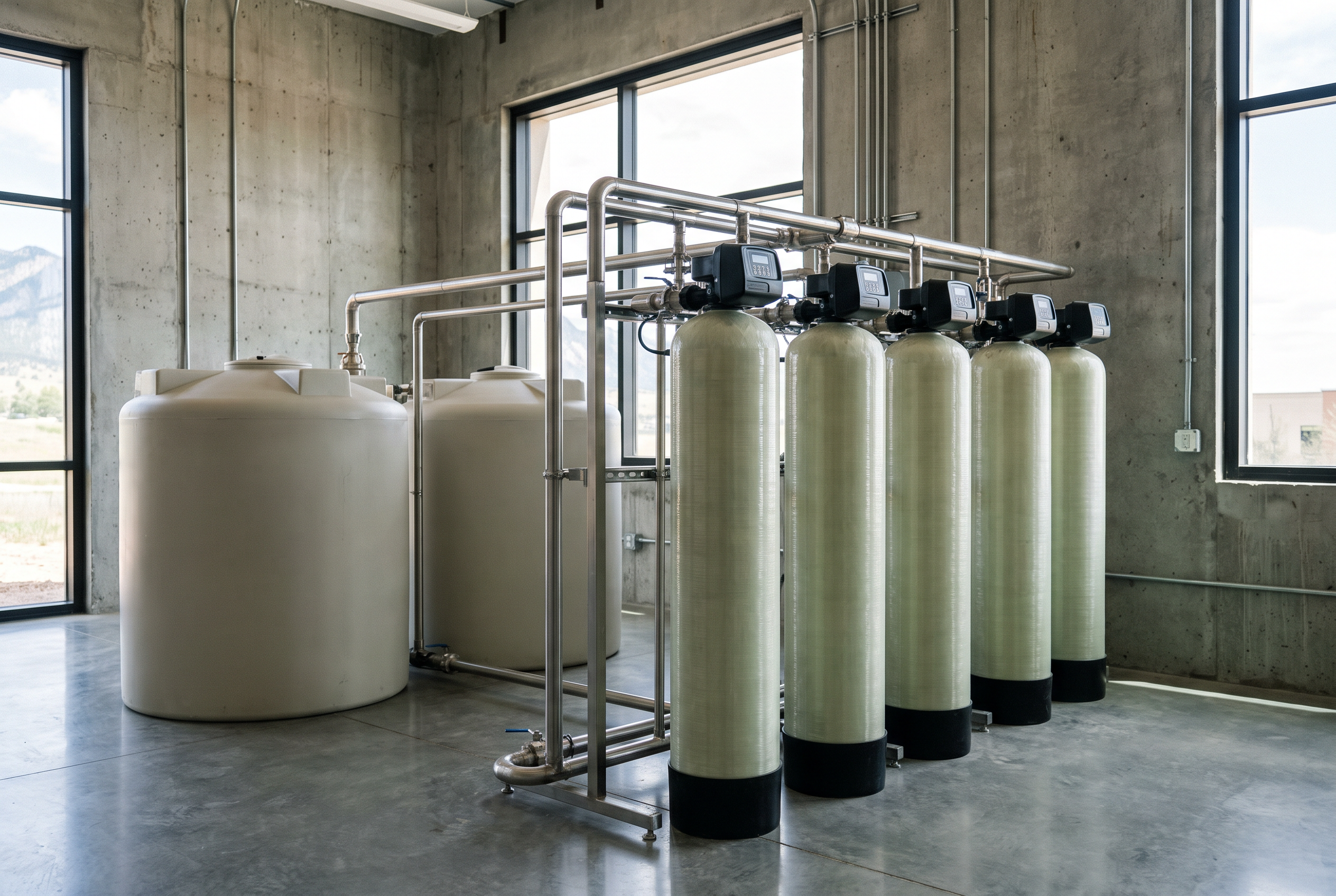
The most common softening technology uses a process called ion exchange. Inside the softener tank, there’s a bed of resin beads that are charged with sodium ions. When hard water passes through, the resin grabs onto the calcium and magnesium ions and releases sodium ions in their place. The result is water that feels noticeably different — soap lathers more easily, fixtures stay cleaner, and appliances last longer. Once the resin becomes saturated with hardness minerals, the system regenerates by flushing the beads with a brine solution, which resets them for another cycle. We install and service residential water softener systems designed to handle the specific hardness levels we see in Aurora and surrounding areas, including Idaho Springs where well water can be even more mineral-heavy. It’s worth noting that softened water isn’t the same as purified water. Softening addresses hardness, but if you’re concerned about other contaminants, you may want to pair your softener with additional filtration. The WHO drinking water quality guidelines provide a helpful overview of what to think about when evaluating your overall water quality beyond just hardness.
Signs Your Aurora Home Needs a Softener
Hard water leaves clues everywhere. If you’re constantly wiping white scale off your showerheads, finding spots on your glassware after running the dishwasher, or noticing your water heater isn’t performing like it used to, hardness is likely the culprit. Many Aurora homeowners also report that their skin feels dry and their hair feels brittle — these are classic symptoms of washing in mineral-heavy water. Another telltale sign is soap that won’t lather. If you find yourself using twice as much shampoo or laundry detergent as the bottle recommends, your water is fighting you. We’ve helped families across the region — from Aurora out to Idaho Springs — identify these issues and find solutions that fit their homes and budgets. You can also check the EPA WaterSense water efficiency resources for tips on how hard water impacts appliance efficiency and water usage over time. The buildup inside pipes and appliances forces them to work harder, which means they use more energy and wear out faster. A properly sized softener can extend the life of your dishwasher, washing machine, water heater, and even your coffee maker.
Choosing the Right System and Maintaining It
Not every softener is right for every home. Sizing depends on your household size, your daily water usage, and the specific hardness level of your water. A system that’s too small will regenerate constantly, wasting salt and water. A system that’s too large is an unnecessary upfront expense. At Water Works, we test your water first and then recommend a system sized to your actual needs. We also offer commercial water softener solutions for businesses in Aurora that deal with high-volume water usage, such as restaurants, laundromats, and apartment complexes. Once your system is installed, maintenance is straightforward but important. You’ll need to keep the brine tank stocked with salt, and the system should be checked periodically to ensure the resin bed is functioning properly. We service systems throughout the Aurora area and up into Idaho Springs, so whether you need a new installation or maintenance on an existing unit, we can help. Regular maintenance not only keeps your water soft but also extends the life of the equipment itself, protecting your investment for years to come.
At Water Works, we’ve built our reputation on honest advice, quality installations, and ongoing support. We don’t just sell water softeners — we help you understand what’s in your water and why it matters. Whether you’re dealing with stubborn hard water in Aurora or managing mineral-heavy well water in Idaho Springs, we’d love to help you find the right solution. Give us a call at 303-248-3390 to schedule a water test or learn more about our softening and filtration options. Your home — and your skin — will thank you.