
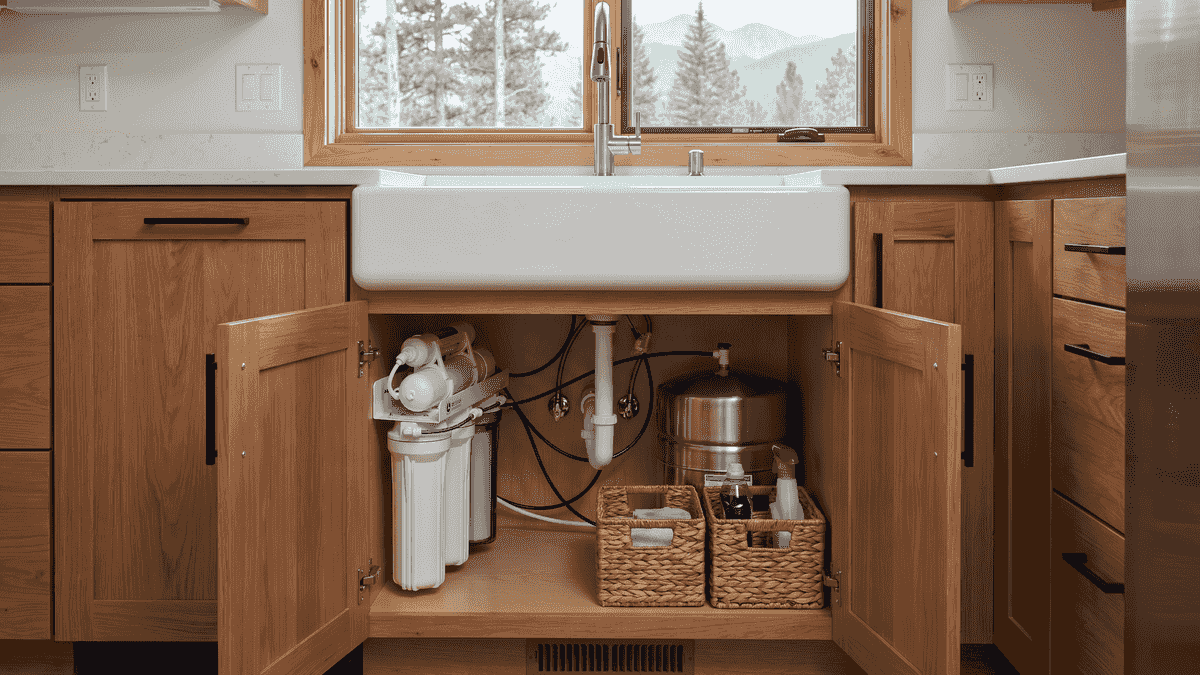
 Reverse Osmosis
Residential · Point-of-use
Under Sink Water Filters in Colorado
Clean drinking water right where you need it. Under-sink water filters treat the water at your kitchen tap — the water you drink and cook with — from a compact system tucked in the cabinet below. Affordable, effective, and built around what your water test finds.
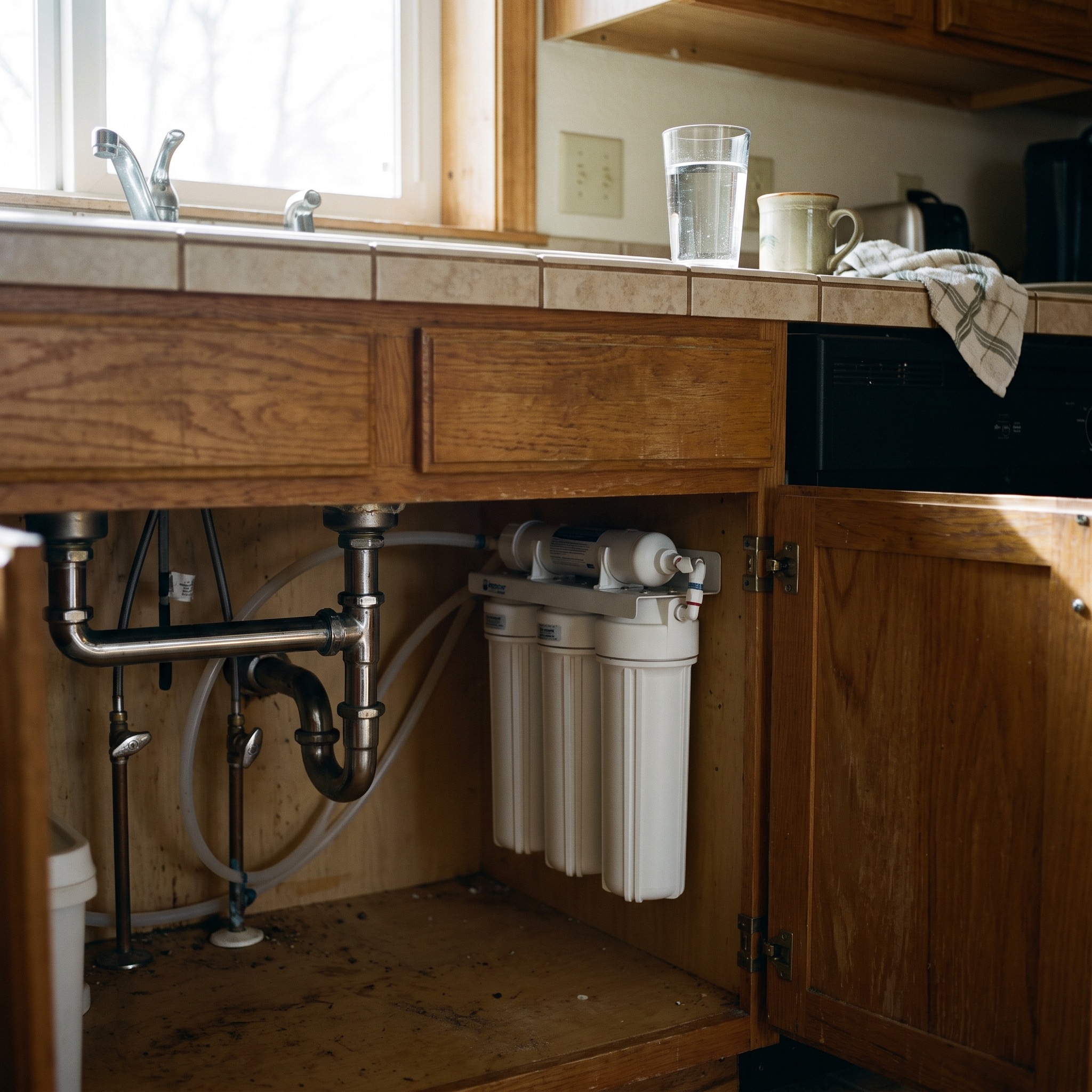
- Fresh TasteGreat-tasting drinking water
- Convenient AccessFiltered water instantly
- Compact DesignFits beneath sinks
What it is
How Under-Sink Water Filters Work
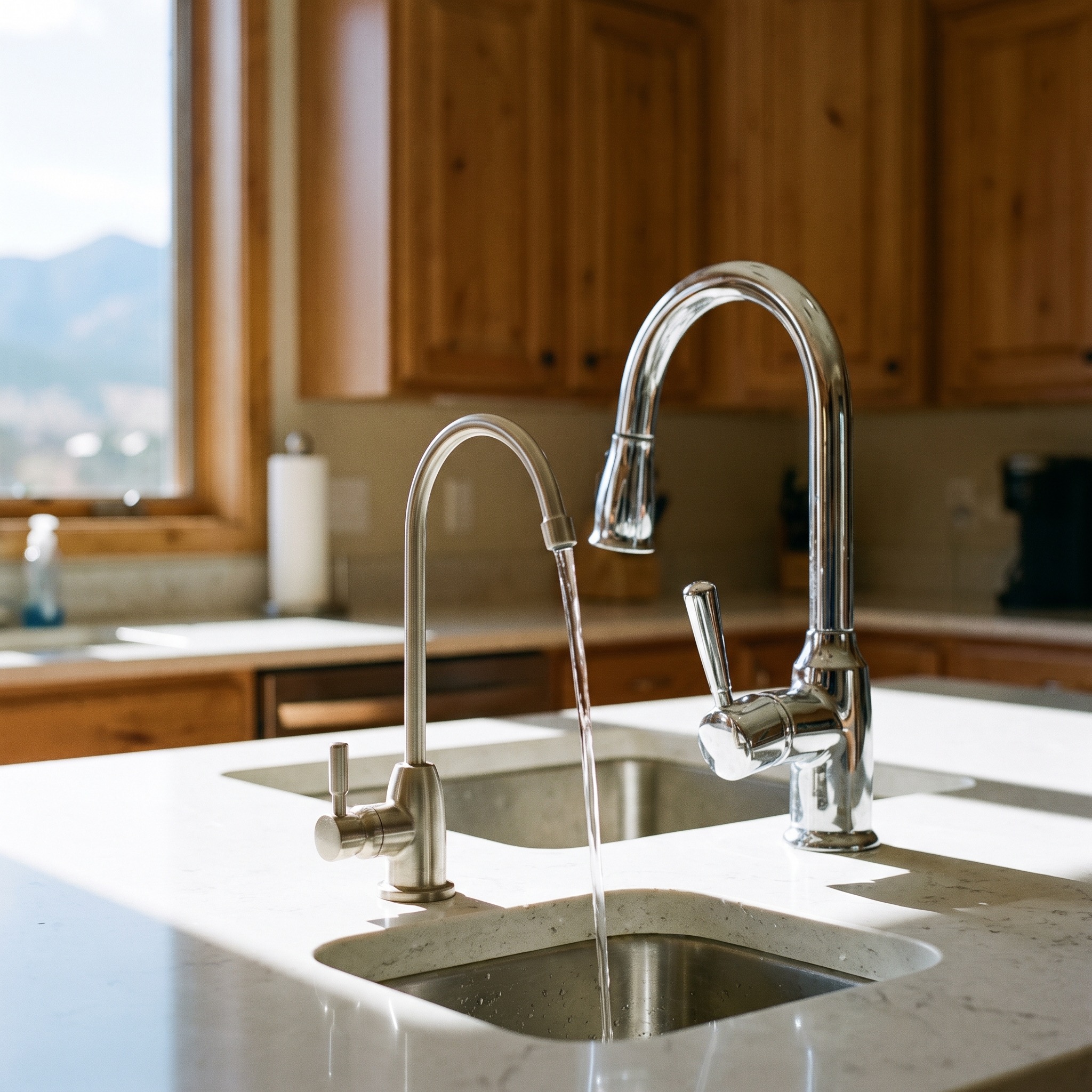
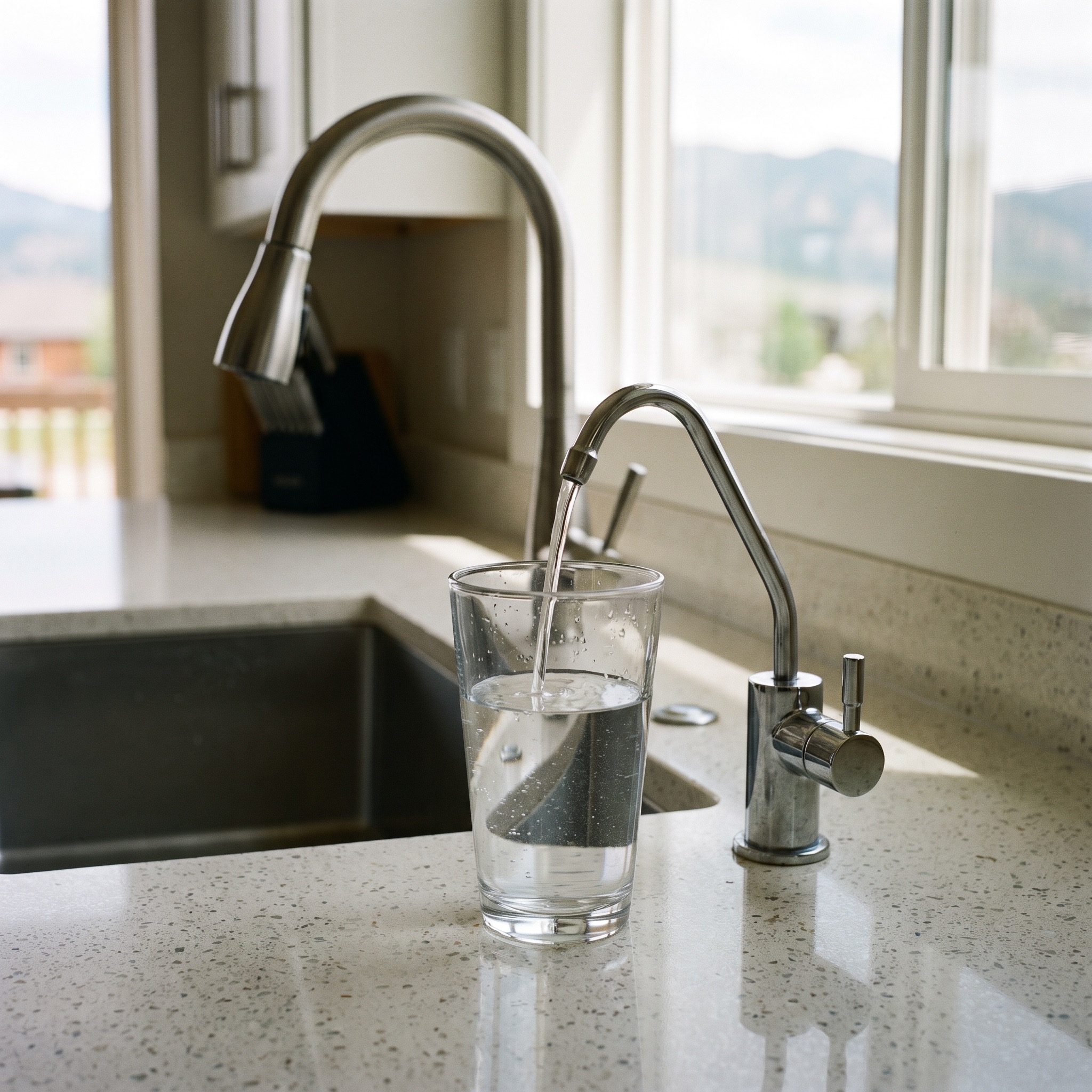
An under-sink water filter treats and improves your tap water at the point you use it most. These systems install neatly in the cabinet space beneath your kitchen sink and connect either to your existing faucet or to a dedicated filtered-water tap mounted on the counter.
Here's the logic: the average American household uses over 300 gallons of water a day, but most of it goes to laundry, dishes, and chores. Rather than treating every gallon, an under-sink filter concentrates on the water you actually drink and cook with — the water that matters most.
Water flows from your cold water supply line into the filter system, passes through one or more filter cartridges that remove chlorine, taste, odor, and — depending on the technology — dissolved contaminants like lead and PFAS. The filtered water then flows out through your faucet or dedicated tap. There's no storage tank (unless you're using reverse osmosis), no electricity, and no waste — just clean water on demand.
The comparison
Under-Sink vs. Whole House Water Filters
Both have their place. An under-sink filter treats the water you drink; a whole house filter treats the water you live with. Here's how they compare:
| Under-Sink Filter | Whole House Filter | |
|---|---|---|
| Installation point | Under the kitchen sink — treats one tap | Main water line — treats every tap, shower, and appliance |
| What it treats | Drinking and cooking water only | Drinking, cooking, showering, laundry, appliances |
| Contaminant range | Chlorine, taste, lead, PFAS — depends on filter media | Sediment, chlorine, hardness, bacteria, pH — depends on stages |
| Skin and hair benefits | No — only affects the kitchen tap | Yes — chlorine-free water in every shower |
| Appliance protection | No — only treats one tap | Yes — scale and sediment protection for water heaters, washers |
| Upfront cost | Lower — compact, single-point installation | Higher — multiple stages, main-line installation |
| Maintenance | Cartridge replacement every 6-12 months | Cartridge replacement every 6-12 months per stage |
| Best for | Homes where only drinking water needs improvement | Homes with water quality issues affecting the whole house |
Why under-sink
Benefits of Under-Sink Water Filters
Better taste, no odors
Removes the chlorine taste and chemical odors from your drinking water at the tap you actually drink from.
A fraction of the cost
A low-cost alternative to whole-house filtration — and more affordable than bottled water over time.
Safe water on demand
Filtered water the moment you open the tap. No waiting on a pitcher to drip through.
Treats the water that matters
Most household water goes to laundry, dishes, and chores. An under-sink filter prioritizes what you drink and cook with.
Zero counter space
The compact design lives in the cabinet under your sink and frees up your countertop entirely.
Quietly out of sight
Once installed, there's nothing to look at and little to think about — just clean water from the faucet.
Filter media
How Carbon Filtration Works
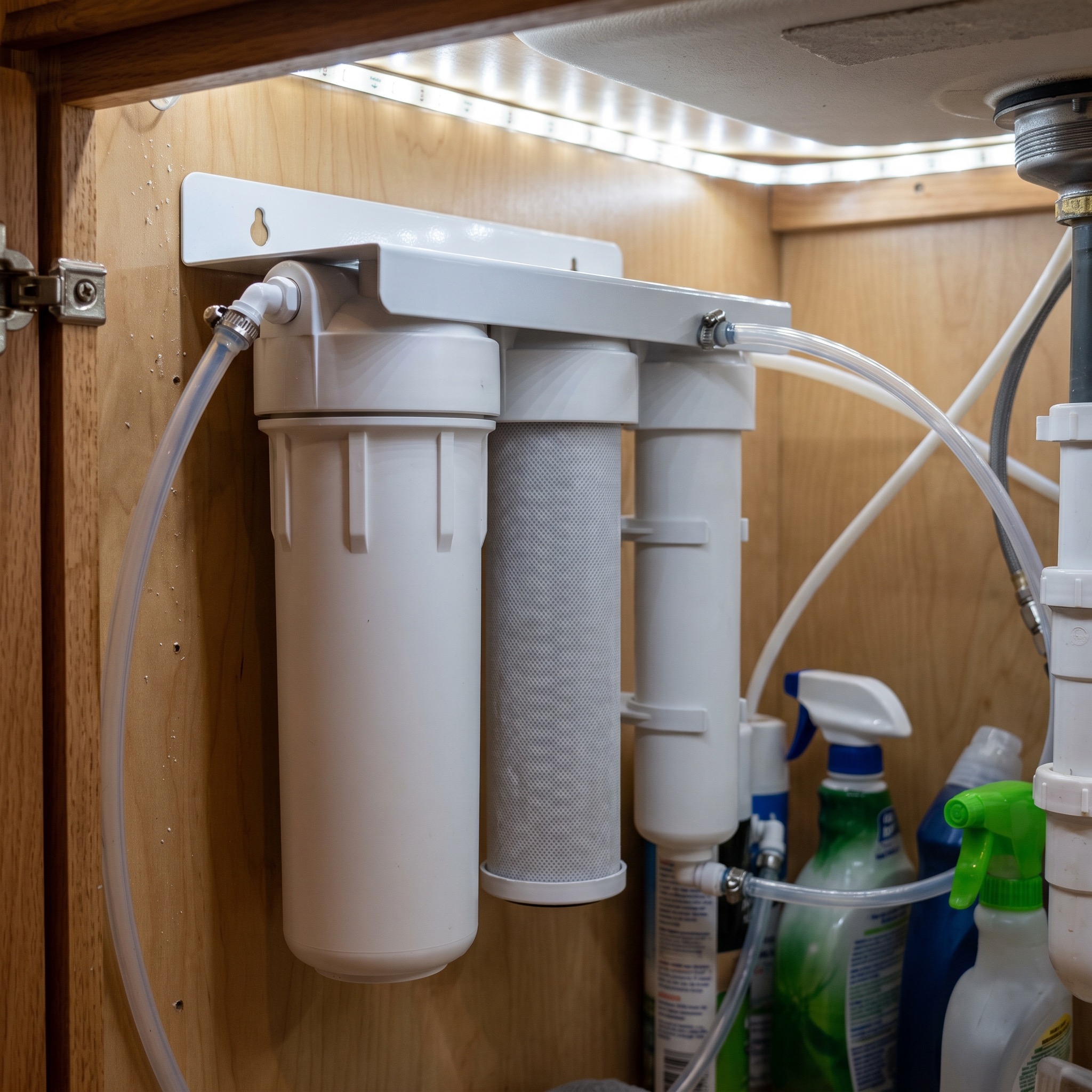
Carbon is the workhorse of under-sink filtration. Activated carbon is engineered with a massive internal surface area — a single gram can have the surface area of a tennis court. When water passes through, chlorine, disinfection byproducts, VOCs, and taste/odor compounds stick to the carbon surface through a process called adsorption. The result is water that tastes and smells clean.
Carbon block filters take this further: the carbon is compressed into a dense block with microscopic pores, giving the water more contact time with the carbon and filtering out finer particulates. That's why most multi-stage under-sink systems use carbon block as one of their stages — it's the most effective media for chlorine and taste without adding anything to your water.
Certification
NSF/ANSI Certification and What It Means
When we specify a filter, we look for NSF/ANSI certification — the industry standard that verifies a filter does what the manufacturer claims. Three standards matter most for under-sink filtration:
NSF/ANSI 42 certifies aesthetic improvement — chlorine taste, odor, and particulates. This is the baseline for any carbon filter we install. NSF/ANSI 53 certifies health-related contaminant reduction — lead, VOCs, PFAS, and more. NSF/ANSI 58 certifies reverse osmosis systems for the full range of dissolved contaminants.
The certification matters because it's independent verification — not the manufacturer's own claim. When your water test shows a specific contaminant, we specify a filter certified to reduce it.
Configurations
Choosing the Right Under-Sink System
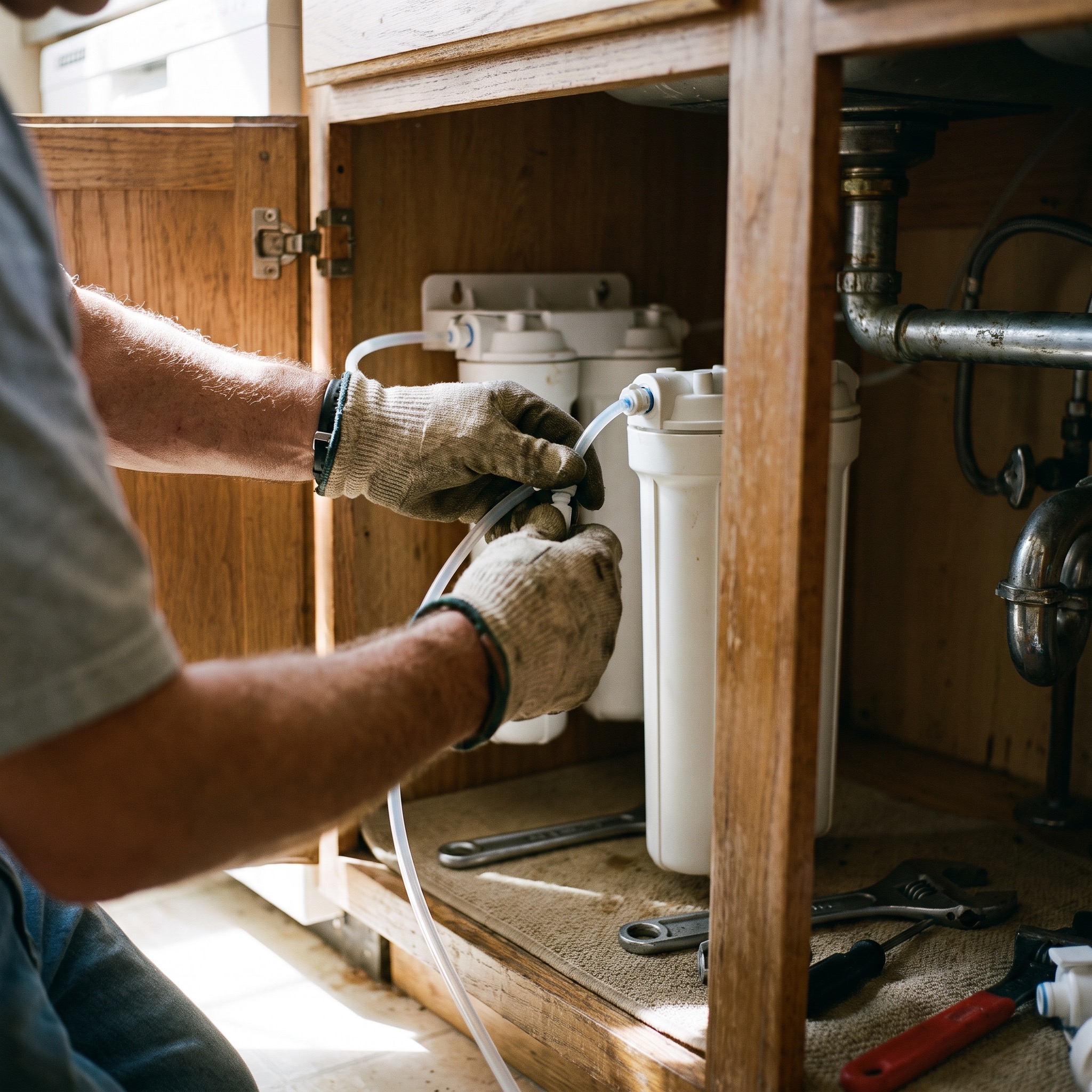
Under-sink systems come in several configurations — from a simple single-stage cartridge to full reverse osmosis under the counter. The right setup depends on your water, your kitchen, and your budget.
That's the part we handle: we test your water, match the system to what's actually in it, and install it so it just works.
System types
Ways to Configure an Under-Sink Filter
Single stage
One filter, one job — a simple, affordable starting point for improving taste and odor. Best when chlorine is the only issue.
Multi-stage
Several filters in sequence, each targeting a different class of contaminant. Sediment first, then carbon, then specialty media.
Reverse osmosis
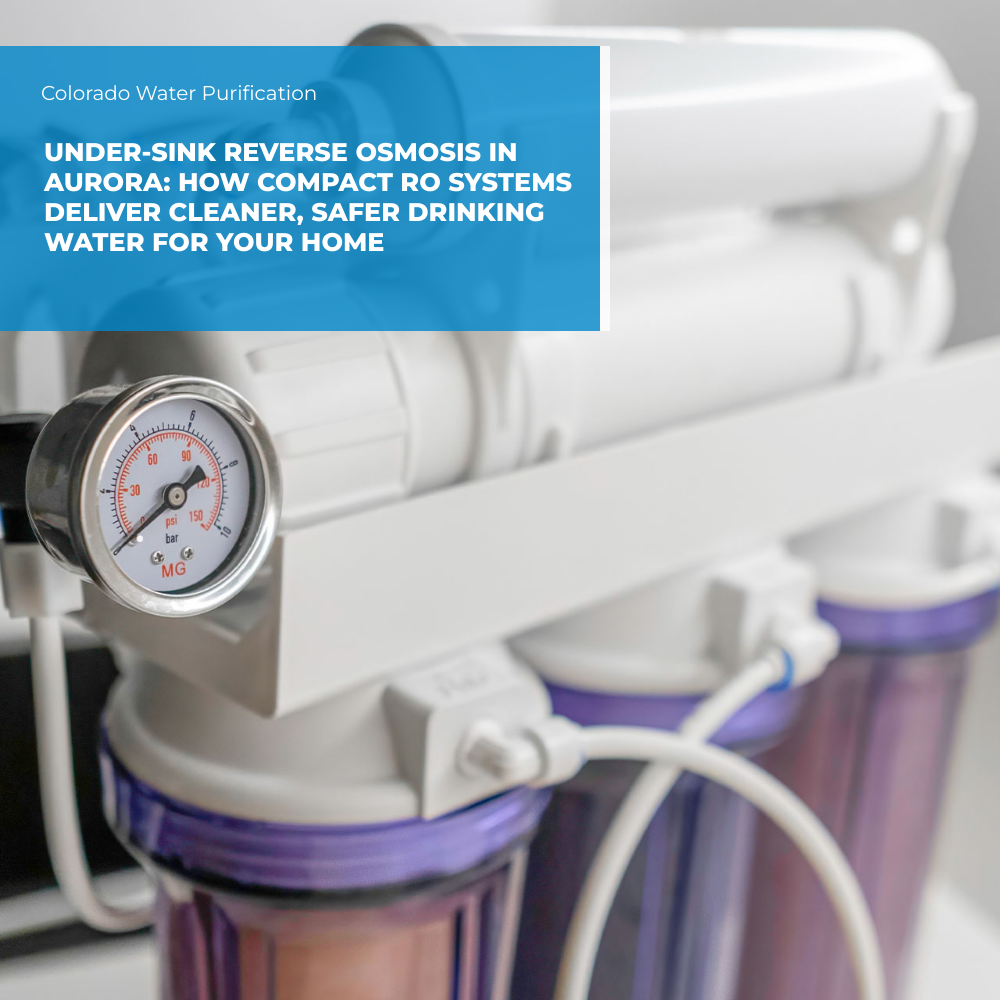
Membrane filtration under your sink for the most thorough point-of-use treatment — removes dissolved contaminants like lead, arsenic, and PFAS.
Explore reverse osmosisInline or dedicated faucet
Feed your existing kitchen faucet, or add a separate dedicated tap just for filtered water. Both options work — it's a matter of preference and plumbing.
Filter technologies
Filter Technologies We Install
What goes under your sink depends on what a water test finds coming out of your tap. Here are the filter media we work with — each targets a specific class of contaminant.
Sediment filters
Capture rust, sand, and particulates before they reach finer filters.
Activated carbon
The workhorse for chlorine, odors, and taste. NSF/ANSI 42 certified for aesthetic improvement.
Carbon block
Densely packed carbon for finer filtration and longer contact time with the water.
Catalytic carbon
Enhanced carbon that also targets chloramines and hydrogen sulfide.
Ion exchange
Swaps unwanted dissolved minerals for harmless ones — reduces lead and hardness at the tap.
KDF filters
Copper-zinc media that reduces heavy metals and inhibits bacteria growth.
Iron & oxidation filters
For water with iron staining, metallic taste, or sulfur smell.
Activated alumina
Targets fluoride and arsenic in the water you drink.
UV purifiers
Ultraviolet light neutralizes bacteria and viruses without chemicals.
Maintenance
Under-Sink Filter Maintenance
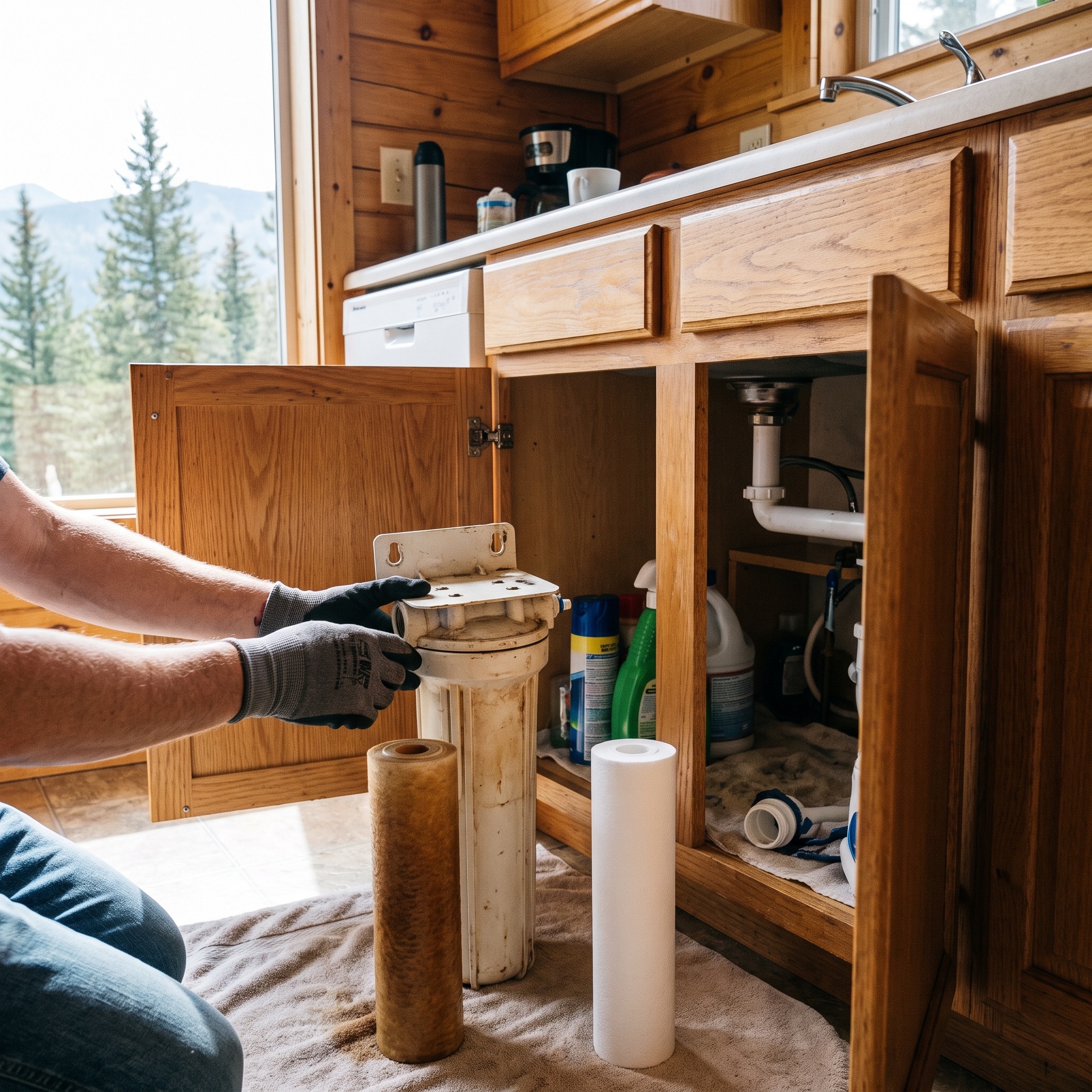
Under-sink filters need cartridge replacement — that's the only upkeep. Carbon cartridges typically last 6-12 months depending on your water volume and chlorine level. Sediment pre-filters may need swapping more often if your water has high particulate load. RO membranes last 2-5 years.
We give you the replacement schedule for your specific system after installation and send reminders when it's time. If you skip a replacement, the filter doesn't stop working — it just loses effectiveness gradually. No damage, no mess, just a call to us to swap the cartridge.
Cost and value
Cost of an Under-Sink Water Filter
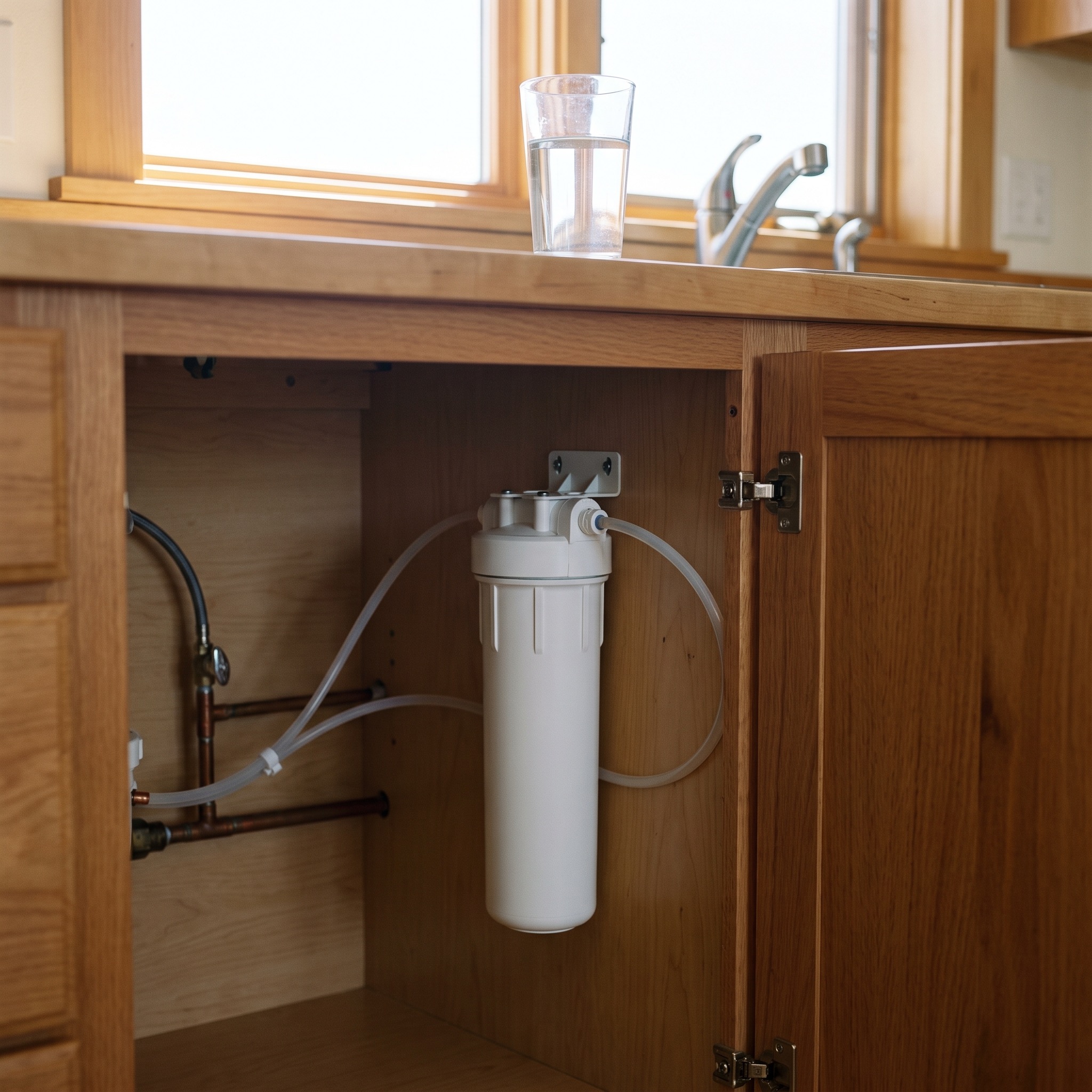
The cost depends on the technology, number of stages, and your kitchen's plumbing. A single-stage carbon filter costs less than a multi-stage system with specialty media or reverse osmosis. We size and specify from your water test — the only honest quote comes after we know what's actually in your water.
What most homeowners find is that an under-sink system pays for itself quickly against bottled water — and the convenience of filtered water on demand from the tap is something you notice every day. We'll explain exactly what you're paying for and why.
Our process
Under-Sink Filter Installation Process
From water test to clean water at the tap — and the last step never really ends, because we stay on for filter replacements.
Test your water
We test what's actually in your tap water — chlorine, lead, hardness, whatever it finds. The filter system is designed around your results, not a guess.
Match the technology
From the test results, we match the right filter media and configuration. Carbon for chlorine, specialty media for specific contaminants, or RO for the full range.
Install under the sink
Our technicians install the system in the cabinet, connect it to your faucet or a dedicated tap, and verify water quality before we leave.
Replace on schedule
We give you the replacement schedule for your specific filters and send reminders when it's time. Most cartridges need changing every 6-12 months.
Resources
Under-Sink Filter Spec Sheets & Equipment Data
The spec sheets below are from Hydronix, Calgon Carbon, and AXEON — among the manufacturers we work with. All have certified performance data. Download to compare filter capacities, micron ratings, and sizing.
- Carbon Block Filter Spec SheetHydronix carbon block filter specifications — chlorine reduction capacity, flow rates, and micron ratings for under-sink filtration.
- Sediment Cartridge Spec SheetHydronix sediment depth cartridge specifications — particulate removal ratings, flow rates, and capacity for pre-filtration.
- Carbon Filter Spec SheetCalgon Carbon WPC15 specifications — chlorine adsorption capacity and flow rates for point-of-use water treatment.
- Filter Sizing GuideAXEON water filtration range and sizing table — match the right filter to your water volume and quality.
Under-Sink Water Filter FAQs
Does an under-sink filter treat all the water in my house?
No — it's a point-of-use system. It treats the water at one tap, usually the kitchen sink, which is where nearly all of your drinking and cooking water comes from. For whole-home treatment, look at a whole house water filter.
How often do the filters need replacing?
It depends on the filter type and your water. Carbon cartridges typically need replacement every 6-12 months, sediment filters more often if your water has high particulate load. We give you the exact schedule for your specific system after installation.
Which filter technology do I need?
It depends on what's in your water. Activated carbon handles taste and odor; reverse osmosis, ion exchange, and activated alumina target dissolved contaminants. A water test tells us which combination fits your home.
Is an under-sink filter better than a pitcher?
It's faster and more convenient — filtered water on demand from the tap instead of waiting on a pitcher — and cartridges typically treat far more water between replacements. Under-sink systems also use larger, more effective filter media than pitchers can hold.
How much does an under-sink water filter cost in Colorado?
The cost depends on the technology, number of stages, and your kitchen's plumbing. A single-stage carbon filter costs less than a multi-stage system with specialty media or reverse osmosis. We size and specify from your water test — the only honest quote comes after we know what's actually in your water.
What does NSF/ANSI 42 certification mean?
NSF/ANSI 42 is the certification standard for aesthetic water filtration — it verifies that a filter effectively reduces chlorine taste, odor, and particulates. It's the baseline certification we look for on carbon filters. For health-related contaminants like lead or PFAS, look for NSF/ANSI 53 or 401 certification — which covers the filters we install when your water test calls for it.
Can I install an under-sink filter myself?
Some systems are designed for DIY installation, but we generally recommend professional installation. The system needs to connect to your water supply line, and a poor install can leak or reduce water pressure. We install to manufacturer spec and verify water quality at the tap before we call it done.
Will an under-sink filter remove PFAS?
It depends on the technology. Activated carbon and reverse osmosis systems certified under NSF/ANSI 53 or 58 can reduce PFAS. A standard carbon-only filter won't. If PFAS is a concern — and it is for many Colorado communities — we'll specify a system rated for PFAS reduction based on your water test.
From the blog
Under-Sink Filter Articles
Water Works can be accessed at one of our four convenient locations:
Denver Metro:
Northern Colorado:
Colorado Springs Metro:
Pueblo and S Colorado:
Clean water from the tap you use most
Let our experts help you find the right under-sink water filtration system for your home. We'll test your water, recommend the right technology, and handle the installation.
Get a quote- Denver Metro(303) 248-3390
- Northern Colorado(970) 381-4493
- Colorado Springs Metro(719) 694-2650
- Pueblo & S Colorado(719) 836-8118