
 Salt Free Water Conditioners
Residential · Salt-free conditioning
Salt-Free Water Conditioners in Colorado
Salt-free water conditioners treat hard water the way many Colorado homeowners want it treated — no salt, no brine tank, no added sodium, no backwash cycles. Just treated water that doesn't leave scale on your fixtures, plumbing, and water heater.
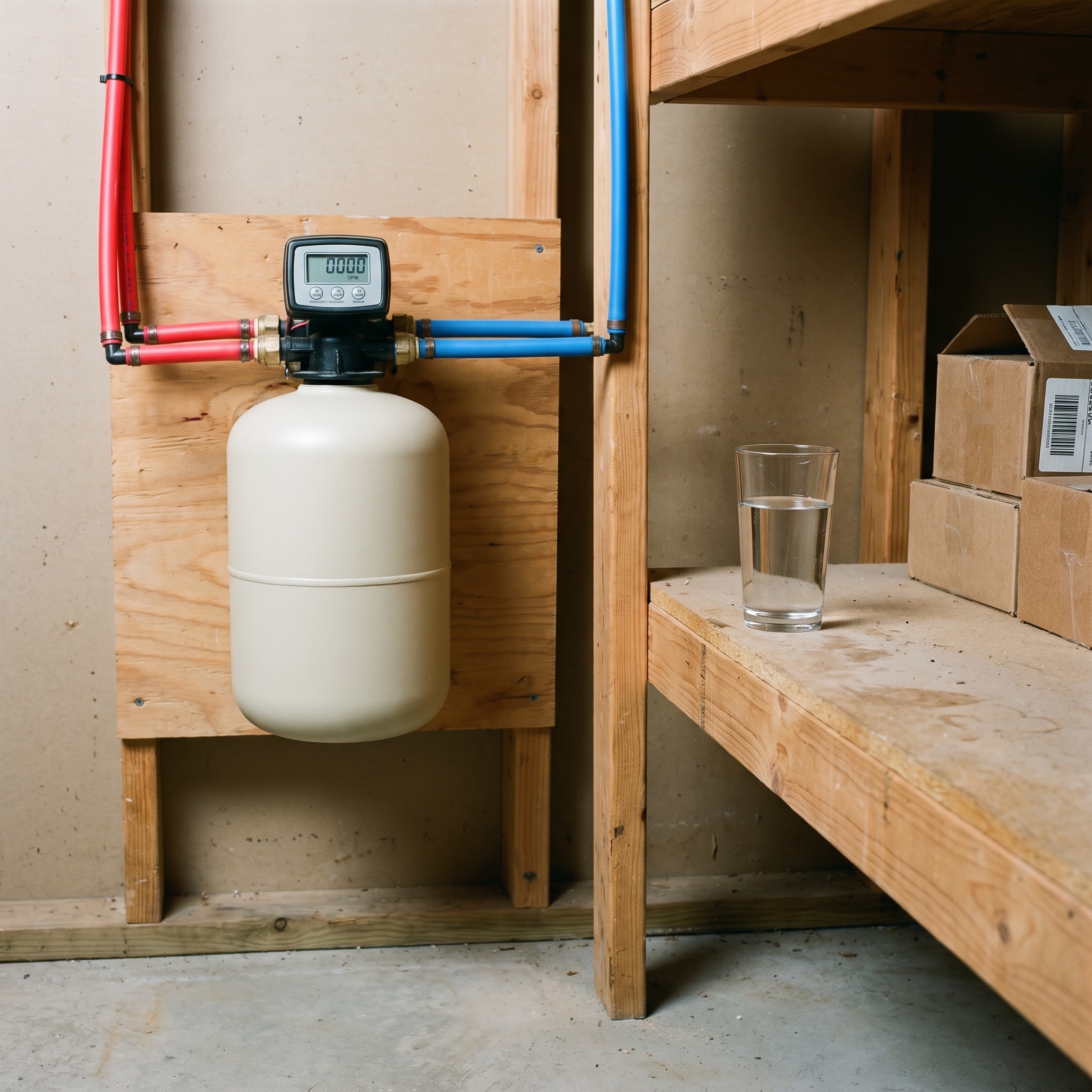
- Scale ProtectionPrevents stubborn mineral buildup
- Salt FreeNo salt or regeneration
- Low MaintenanceMinimal upkeep for years
The problem
Hard Water, In Plain Terms
Hard water is water with high mineral content — mostly calcium and magnesium picked up as groundwater moves through limestone, chalk, and gypsum deposits. It's not unsafe, but it leaves its mark on everything it touches. Over time, scale coats the inside of pipes, reducing water flow and pressure. It acts as an insulator on heating elements, forcing water heaters and appliances to use more energy. And it can contribute to corrosion in older plumbing, potentially leading to pinhole leaks.
If any of these sound familiar, the water coming into your home is hard:
- Scale and white crust on faucets and showerheads
- Spotty glassware and dishes, no matter the rinse cycle
- Film on tubs, tile, and surfaces where water dries
- Scale building up inside water heaters and appliance lines
- Soap and detergent that won't lather properly
The comparison
Salt-Based vs. Salt-Free Water Treatment
Both approaches are legitimate — the right one depends on your water, your plumbing, and what you want the treated water to feel like. A salt-based softener physically removes hardness minerals; a salt-free conditioner changes how they behave so they can't form scale. Here's how they compare:
| Salt-Based Softener | Salt-Free Conditioner | |
|---|---|---|
| How it works | Ion exchange — removes calcium and magnesium, replaces with sodium or potassium | TAC — changes mineral structure so they can't form scale, leaves them in the water |
| Scale prevention | 100% — minerals are removed entirely | 90%+ — minerals stay but can't stick to surfaces |
| Soft water feel | Yes — slick, soap lathers on contact | No — water feels the same, just without scale buildup |
| Salt required | Yes — ongoing salt or potassium refills | No salt, no brine tank, no regeneration |
| Sodium added to water | Yes — amount depends on hardness | No — minerals stay, nothing is added |
| Maintenance | Salt refills, annual resin cleaning, valve service every 1–2 years | Annual water check, media refresh every 3–5 years |
| Water usage | Regeneration cycle uses 25–65 gallons per cycle | No regeneration — zero water waste |
| Environmental impact | Brine discharge adds chloride to wastewater | No discharge — no chloride load on the wastewater stream |
| Best for | Very hard water, homeowners who want true soft water | Moderately hard water, low-maintenance preference, sodium-sensitive diets |
What it does
How Salt-Free Water Conditioners Work
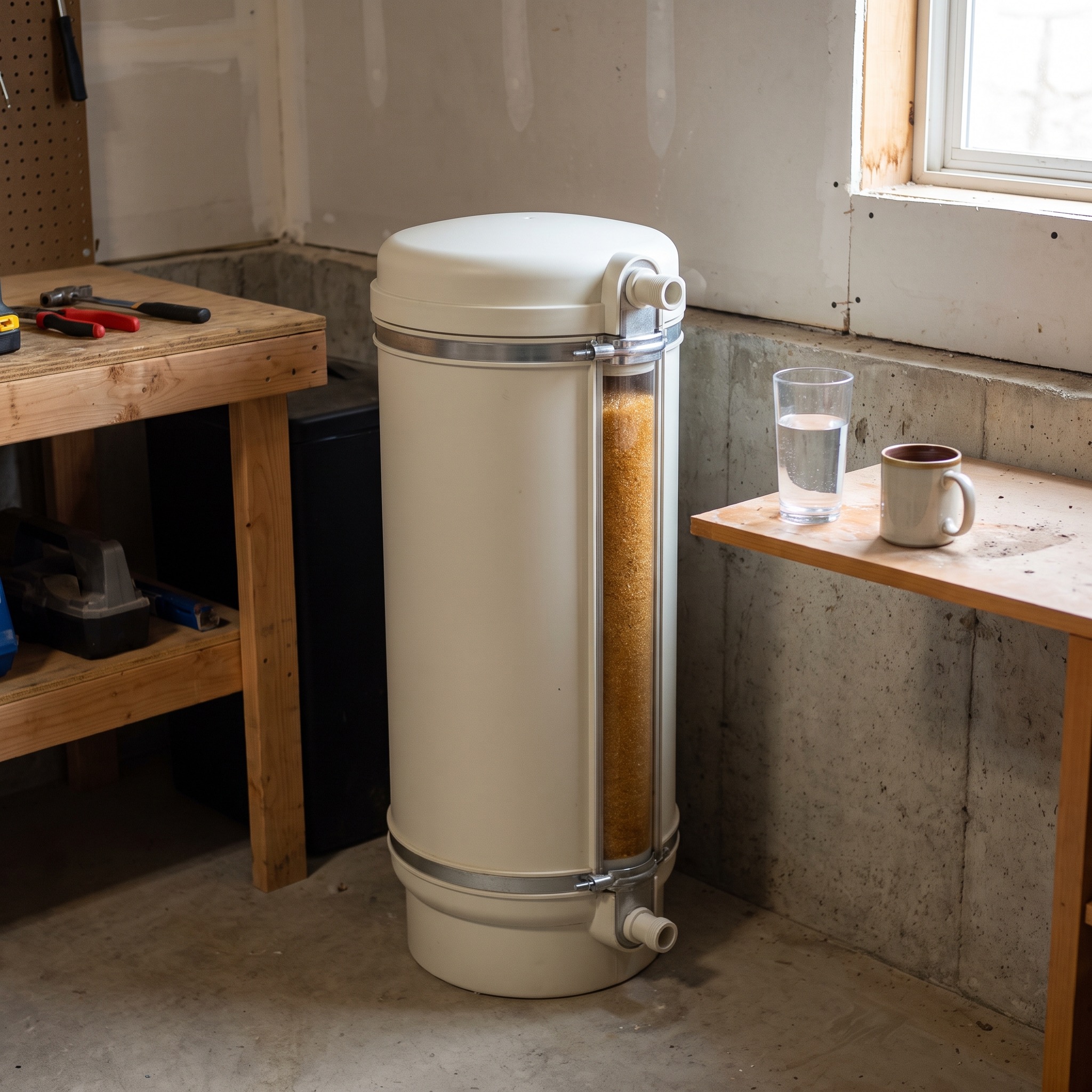
A salt-free conditioner doesn't soften water — it conditions it. The hardness minerals stay in the water, but their chemical structure is changed so they pass through your plumbing without sticking to it. The result is fewer deposits on everything the water touches.
The technology we use is template-assisted crystallization (TAC). Here's how it works: hard water enters the treatment tank and flows through a bed of specialized media. The media acts as a template — it triggers the calcium and magnesium in your water to form microscopic crystals right there in the tank, instead of on your plumbing. These crystals are stable: they stay suspended in the water and wash right through your pipes, fixtures, and appliances without adhering to any surface.
The media isn't consumed in the process — it catalyzes the crystallization over and over. That's why there's no salt to add and no regeneration cycle. The media eventually loses effectiveness after 3-5 years and needs refreshing, but there's nothing to refill in the meantime.
Why salt-free
Benefits of Salt-Free Water Conditioners
No salt, no brine tank
Nothing to add, nothing to haul home from the store, no regeneration cycle running in your basement.
No added sodium
Minerals stay in the water — they're just less likely to stick. Good news for low-sodium diets and sensitive skin.
Eco-friendly operation
No salty discharge to the sewer, no chloride load on the wastewater stream, less water wasted on backwash cycles.
Lower maintenance
No salt to refill, no valve rebuilds, no resin to swap. Most systems are designed to run with minimal ongoing attention.
Scale protection
Treated water still keeps calcium and magnesium out of water heaters, fixtures, and appliance lines.
Plumbing-friendly
Especially useful on copper or older plumbing where added sodium from a softener is a concern.
The local picture
Colorado Water Hardness and Salt-Free Systems
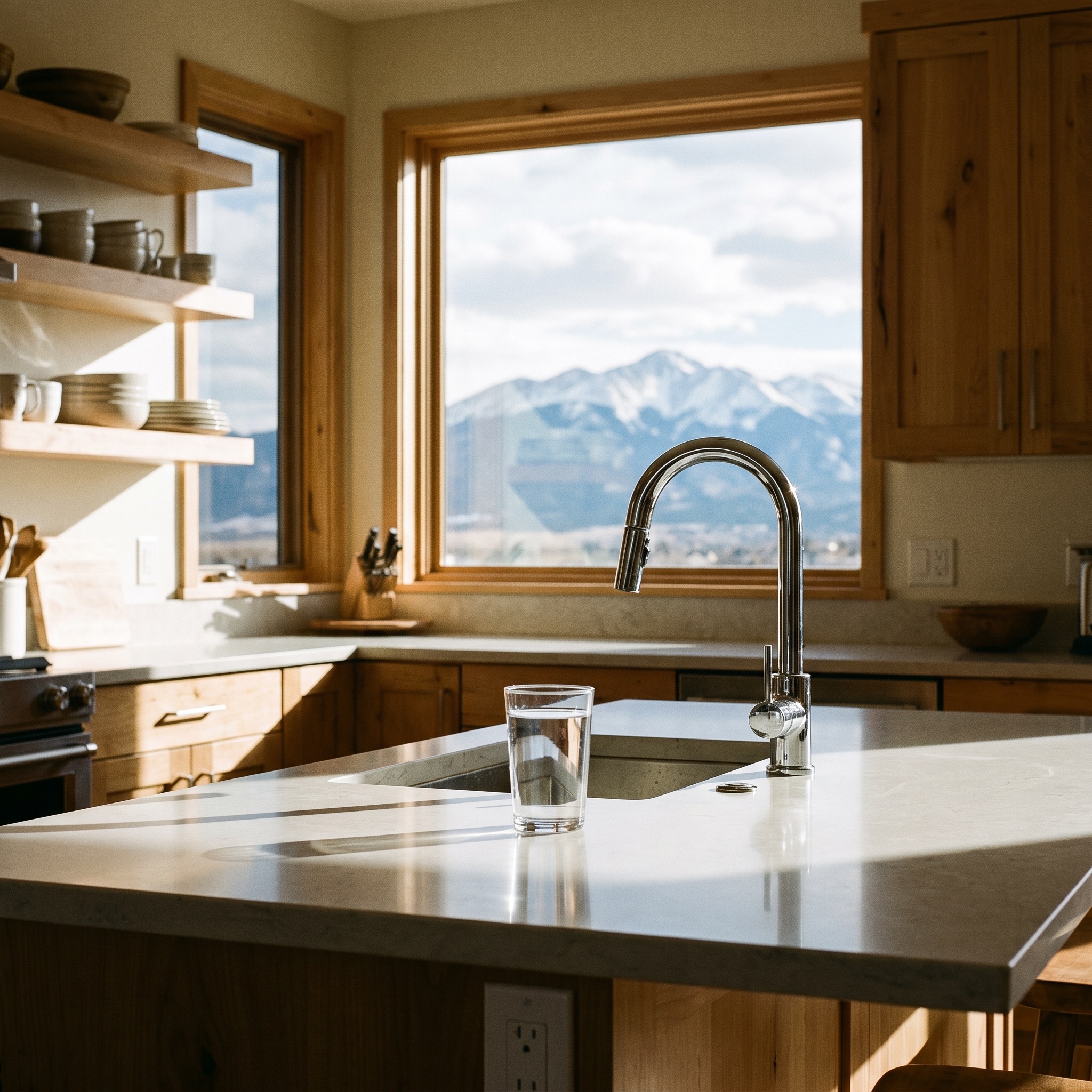
Colorado is a big state, and its water is just as variable. The statewide median is 5.6 gpg — moderately hard on the USGS scale, and right in the sweet spot where TAC performs well. Individual cities range from 1.2 to 19.6 gpg, so the only reliable answer comes from a real test of the water at your tap.
On moderately hard water, salt-free conditioners work very well. On extremely hard water, a salt-based softener is usually the better answer. We measure first and recommend based on what your water actually needs.
- Hardness varies across the state — sometimes block by block
- Denver water trends soft to moderately hard, harder in winter
- Mountain and Western Slope communities often see harder supply
- Well water picks up more minerals as groundwater moves through rock
Hardness scale
Water Hardness Classification Scale
Where does your water fall? Here's the USGS hardness classification and how salt-free conditioners perform at each level.
Soft (0–1.0 gpg)
No treatment needed. You won't see scale or spots. Most high-mountain snowmelt communities fall here.
Slightly hard (1.0–3.5 gpg)
Minimal scale. A conditioner is optional — most homeowners in this range don't need treatment.
Moderately hard (3.5–7.0 gpg)
Salt-free conditioners work well here. This is where Colorado's state median (5.6 gpg) falls. Scale is visible but manageable with TAC.
Hard (7.0–10.5 gpg)
A conditioner can help, but a salt-based softener is more effective at this level. We test first and recommend based on what we find.
Very hard (10.5+ gpg)
Salt-based softening is the right answer. TAC media struggles to keep up at this level. Many Eastern Plains well water samples fall here.
Maintenance
Salt-Free Conditioner Maintenance
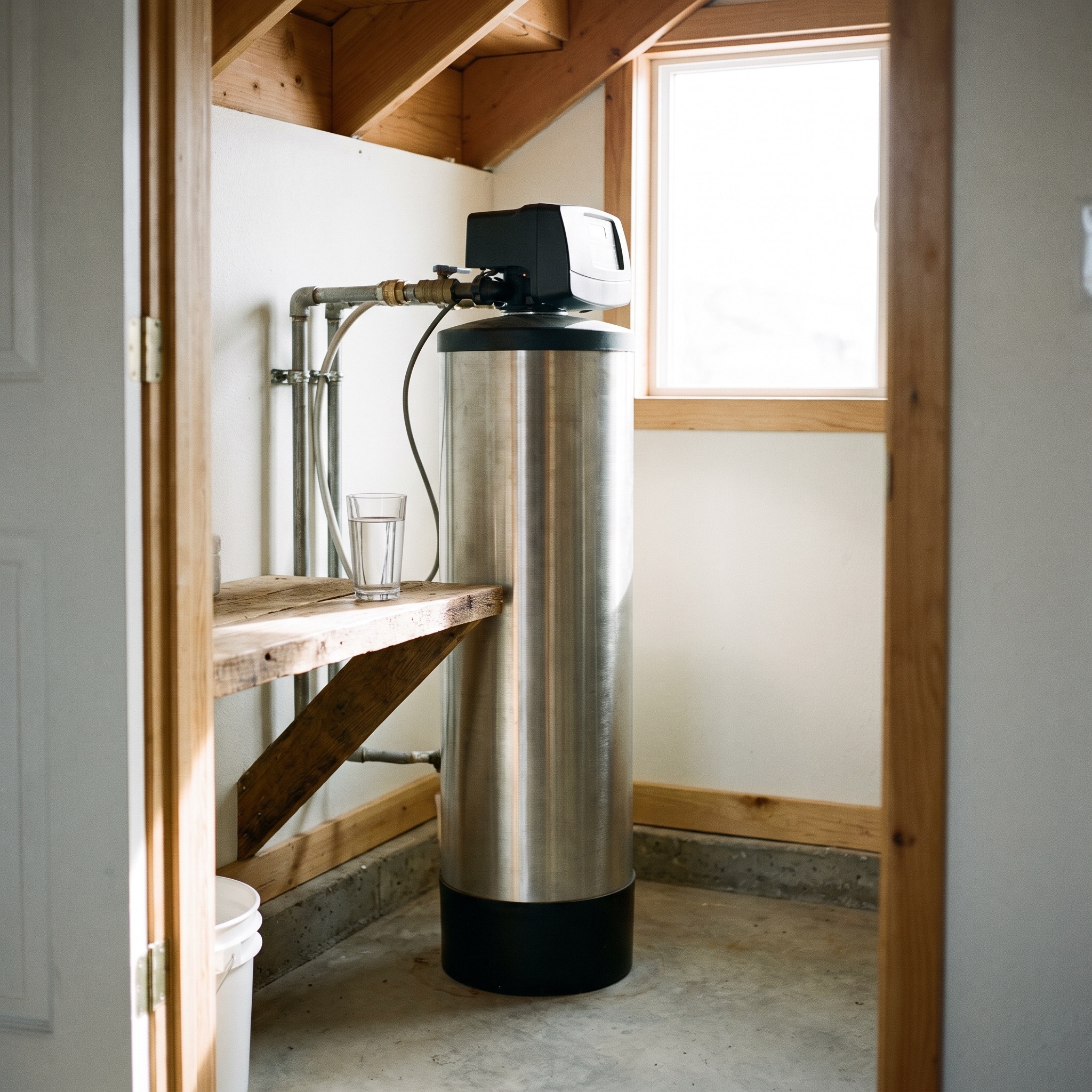
One of the biggest reasons homeowners choose salt-free is the maintenance — or rather, the lack of it. No salt bags to haul home from the store. No brine tank to clean. No valve rebuilds. No regeneration cycle to schedule around. Once installed, a salt-free conditioner runs quietly in the background with almost no attention required.
What we do recommend: an annual water check to verify the system is still performing, and a media refresh every 3-5 years depending on your water volume and hardness. That's it. We handle both — we'll remind you when it's time, test the water, and swap the media in a single visit. If you skip the annual check, the worst that happens is the media loses effectiveness gradually and scale starts to return — no damage, no mess, just a call to us to refresh it.
Cost and value
Cost of a Salt-Free Water Conditioner
The upfront cost of a salt-free conditioner depends on system size, the TAC media used, and your home's plumbing setup. In general, salt-free systems cost less upfront than a comparable salt-based softener — and the gap widens over time.
A salt-based softener needs salt refills, water for regeneration, occasional valve service, and resin replacement. A salt-free conditioner needs none of that — just a media refresh every few years at a fraction of the cost. Over time, the total cost of ownership for a salt-free system is significantly lower than a salt-based system. The only honest number comes after a water test and a site assessment — we'll explain exactly what you're paying for and why.
Our process
From Water Test to Conditioned Water
A salt-free system is only the right answer for some homes. We start with the test, then talk through the trade-offs before anything gets installed.
Test your water
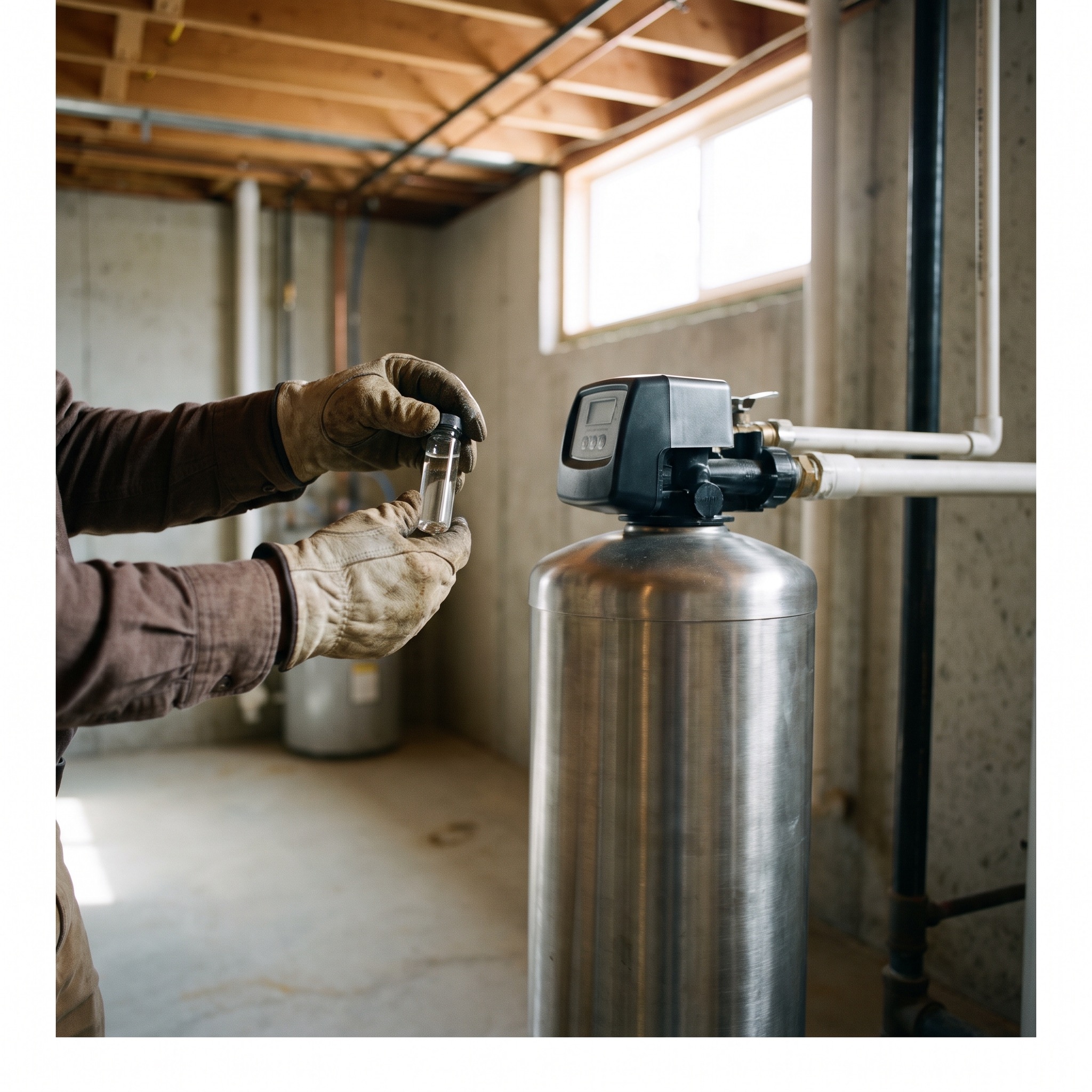
Hardness, mineral content, and what your water is doing to your plumbing all need to be measured before we specify a system.
Confirm salt-free is the right fit
Not every home is a salt-free candidate. We walk through the trade-offs against a salt-based softener based on your water, your plumbing, and your goals.
Size and install the conditioner
Sized to your household and daily use, installed at the main line, and verified at the tap before we call it done.
Minimal ongoing care
Annual water checks and the occasional media replacement are typically all a salt-free conditioner needs.
Resources
Salt-Free Conditioner Spec Sheets & Media Data
The spec sheets below are from US Water Systems and Hydronix — among the manufacturers we work with. Download to compare TAC media performance and specifications.
Salt-Free Water Conditioner FAQs
Is a salt-free conditioner the same thing as a salt-free water softener?
There's no such thing as a salt-free water softener. Salt-based softeners remove hardness minerals; salt-free conditioners change how those minerals behave so they're less likely to form scale. Different mechanism, different result, different maintenance. The NSF/ANSI 44 standard certifies cation exchange softeners — the kind that use salt. Salt-free conditioners operate on a different technology.
Does a salt-free conditioner actually soften water?
It doesn't — and that's the distinction. The minerals stay in the water; they're just less likely to deposit on your fixtures, plumbing, and water heater. You don't get the slick, soft feel of a true softener, but you do get scale protection without salt.
Will my skin and hair feel different?
Some customers notice an improvement, especially if their water is very hard. Salt-free conditioners don't add sodium the way a softener does, so they're often a better fit for people with sensitive skin. But you won't get the slick, soap-lathers-instantly feel of a true softener.
Does a salt-free conditioner work on any hardness level?
It depends. On moderately hard water (3.5–7.0 gpg), salt-free conditioners work very well. On extremely hard water (above 10.5 gpg), a salt-based softener is usually the better answer. We measure your water first and recommend the system that fits it — not the one that's easier to sell.
How much maintenance does a salt-free conditioner need?
Very little. No salt to refill, no brine tank to clean, no valve rebuilds. Most systems need an annual water check and occasional media replacement — far less than a traditional softener. The media typically lasts 3-5 years before it needs refreshing, and we handle that for you.
How long does a salt-free conditioner last?
Most quality salt-free systems are rated for 10+ years of service. The media inside typically needs refreshing every 3-5 years depending on your water volume and hardness. The tank, valve, and fittings last the life of the system.
How much does a salt-free water conditioner cost in Colorado?
The cost depends on system size, the TAC media used, and your home's plumbing setup. In general, salt-free systems cost less than a comparable salt-based softener — both upfront and over time, since there's no salt to buy, no brine to dispose of, and no regeneration water waste. The only honest quote comes after a water test and site assessment — we'll explain exactly what you're paying for and why.
What's the difference between TAC and other salt-free technologies?
Template-assisted crystallization (TAC) is the most effective salt-free technology we install. It works by converting dissolved hardness minerals into microscopic crystals that can't stick to surfaces. Other approaches — magnetic descalers, electromagnetic devices — have less evidence behind them. We install TAC-based systems because the research supports them and the results are measurable.
Will a salt-free conditioner remove existing scale from my pipes?
Not directly. A conditioner prevents new scale from forming, and over time the conditioned water can slowly help loosen existing deposits — but it's not a descaling treatment. If you have significant existing scale in your pipes or water heater, that's a separate issue we'd address during installation.
Can I install a salt-free conditioner if I have iron in my water?
Iron can foul TAC media and reduce its effectiveness. If your water test shows iron, we'll address that first — usually with an iron filter installed upstream of the conditioner. The conditioner handles hardness; the iron filter handles the iron. Both work together in the same system.
From the blog
Salt-Free Conditioner Articles
Water Works can be accessed at one of our four convenient locations:
Denver Metro:
Northern Colorado:
Colorado Springs Metro:
Pueblo and S Colorado:
Talk through whether salt-free is the right call
A salt-free conditioner isn't a one-size-fits-all answer — it's the right answer for some homes and not others. Water Works will test your water, walk through the options, and recommend the system that actually fits your supply and your goals.
Get a quote- Denver Metro(303) 248-3390
- Northern Colorado(970) 381-4493
- Colorado Springs Metro(719) 694-2650
- Pueblo & S Colorado(719) 836-8118