
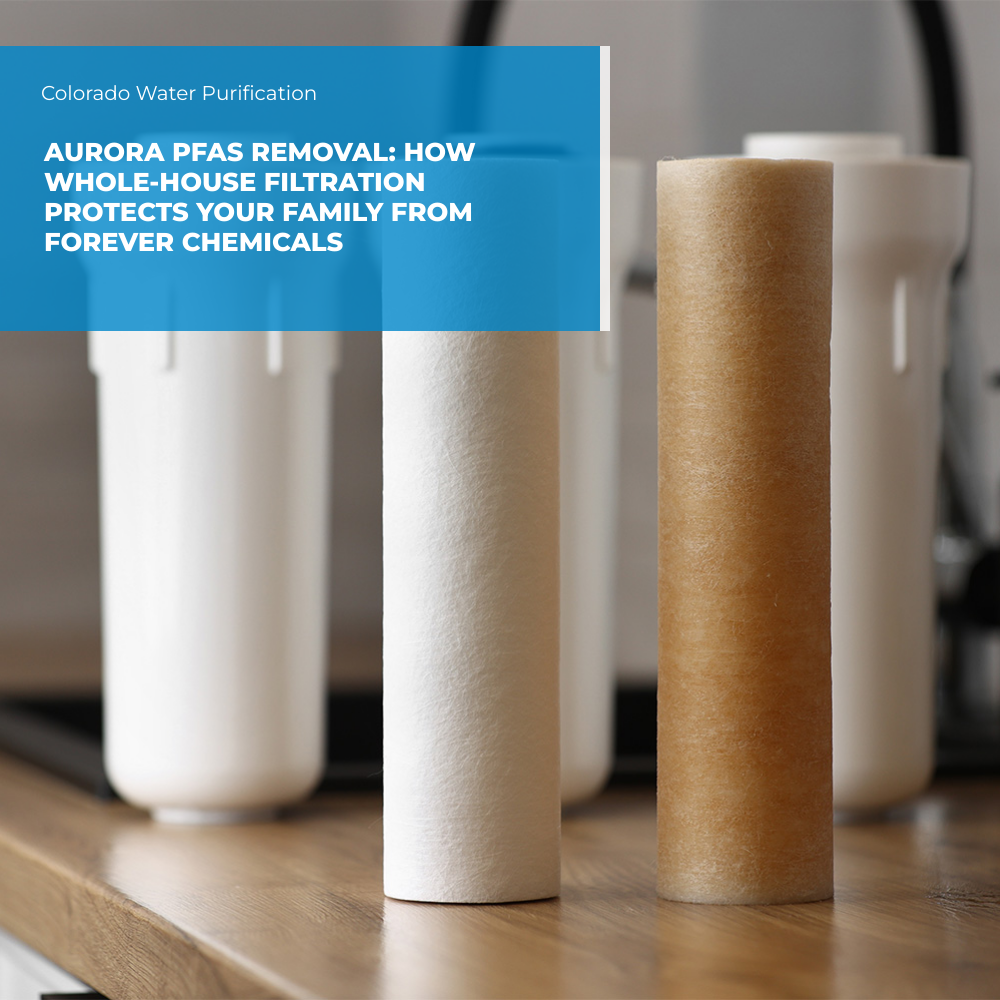
 Pfas Removal
Residential · Whole-home treatment
Whole House Water Filters in Colorado
A whole house water filter is installed where water enters your home — so the water you drink, shower with, wash clothes in, and cook with is the same treated water. For Colorado homes with lead, arsenic, hard water, or aging supply lines, that single change reshapes how the whole house uses water.
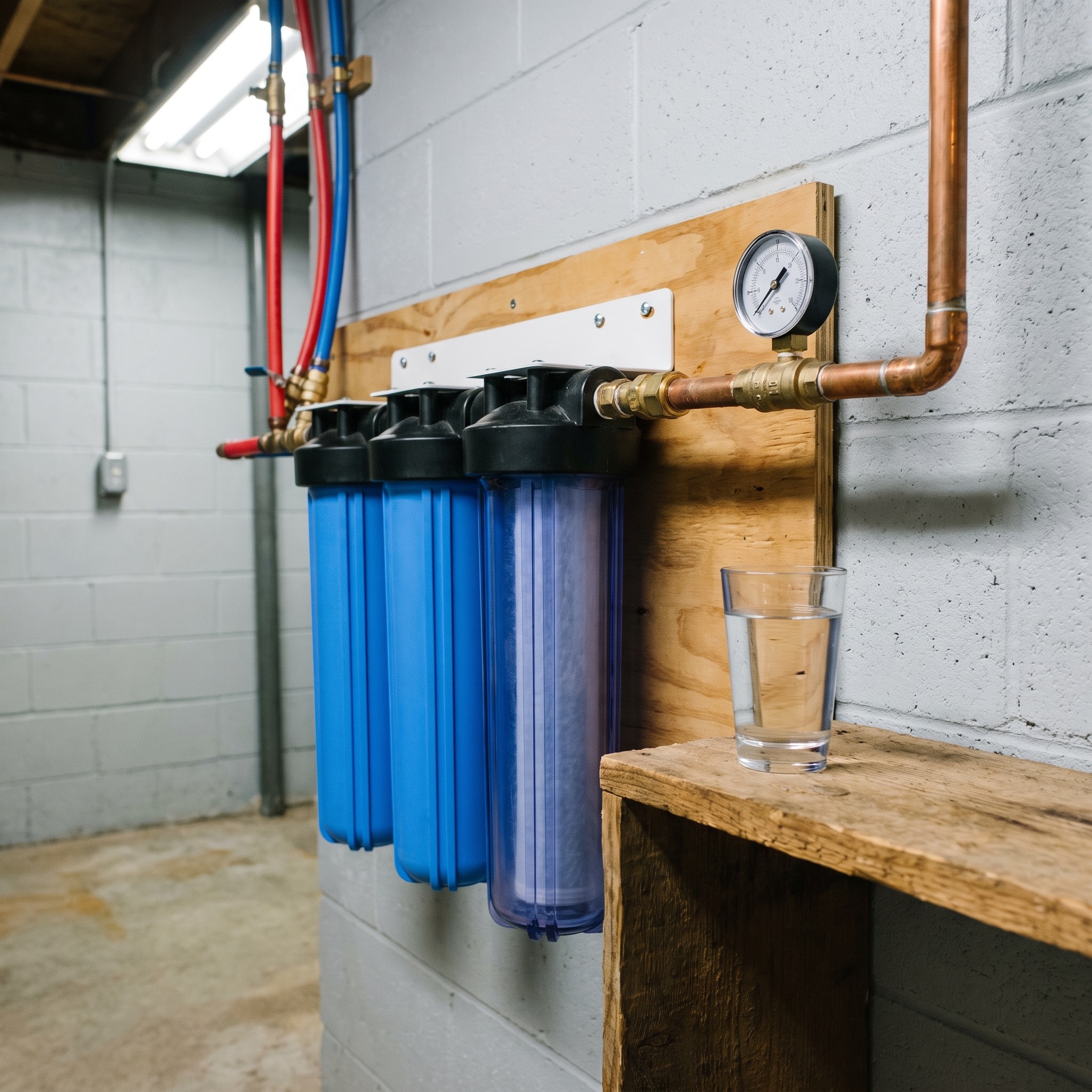
- Complete CoverageFilter every faucet
- Contaminant ReductionCleaner water throughout
- Family ProtectionBetter water everywhere
What it is
How Whole House Water Filters Work
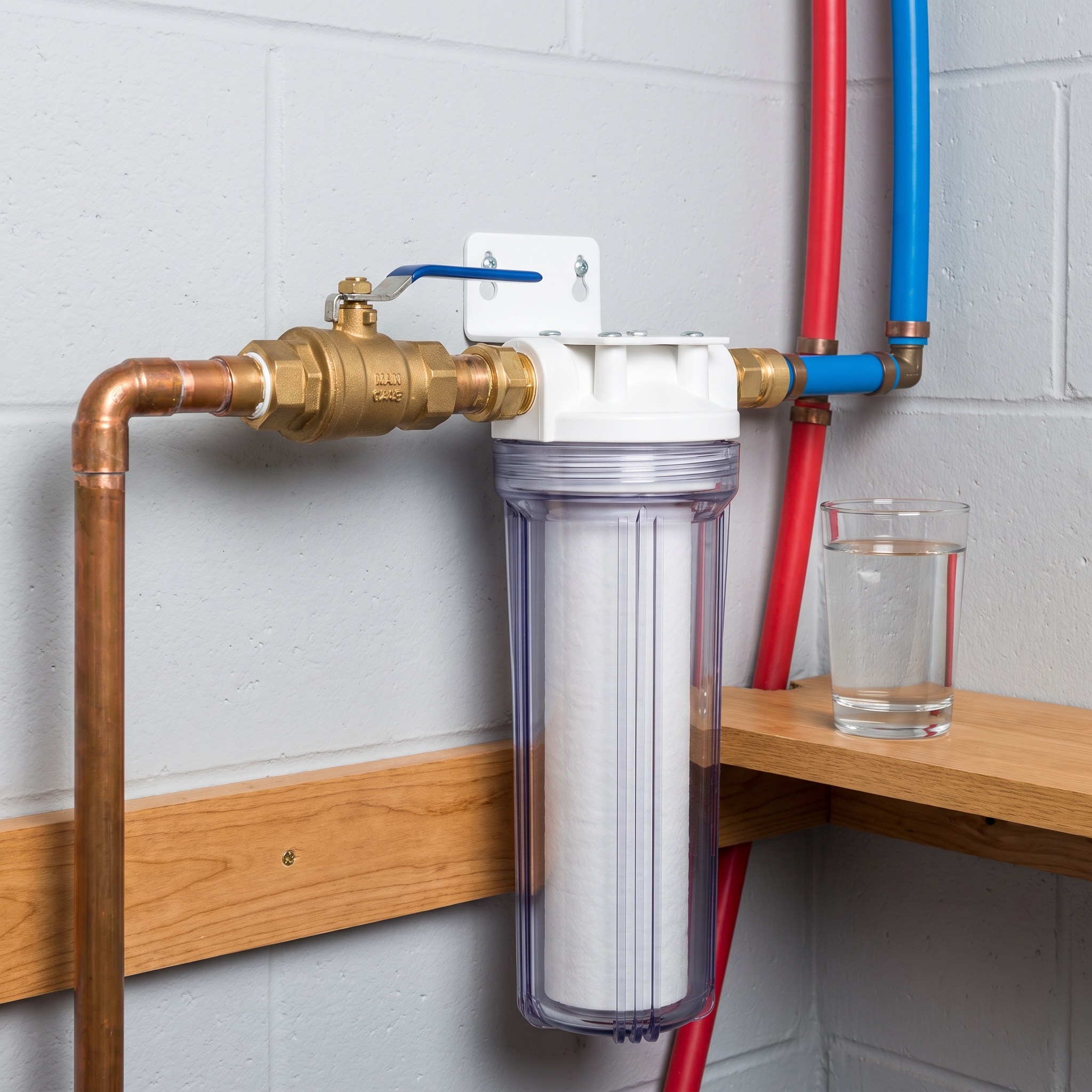
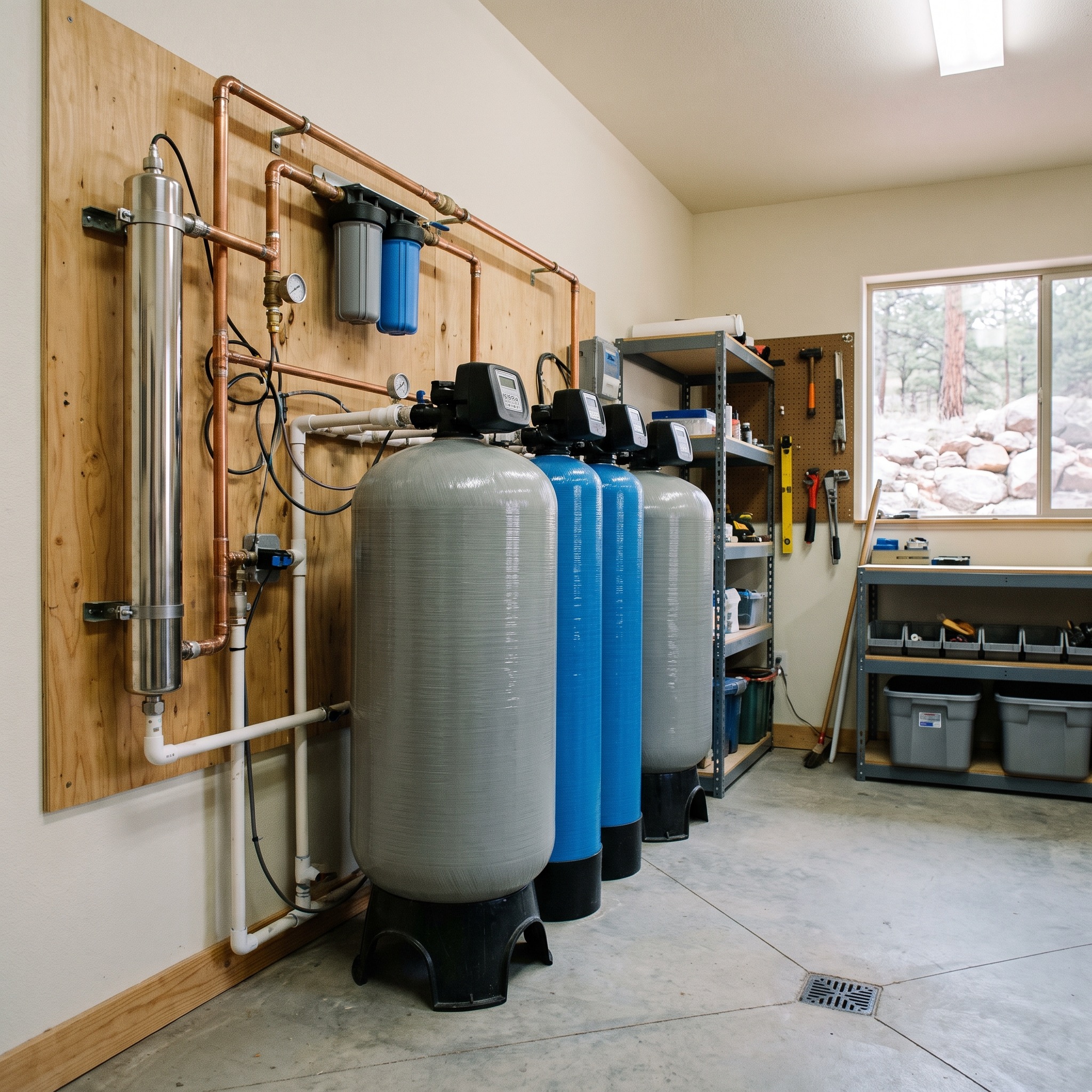
A whole house water filter is a filtration system installed where your water supply enters the home — what the EPA calls point-of-entry treatment. Unlike point-of-use filters like an under-sink system, it treats every drop that comes through the plumbing: the water in your showers, washing machine, hot water heater, and every faucet in the house.
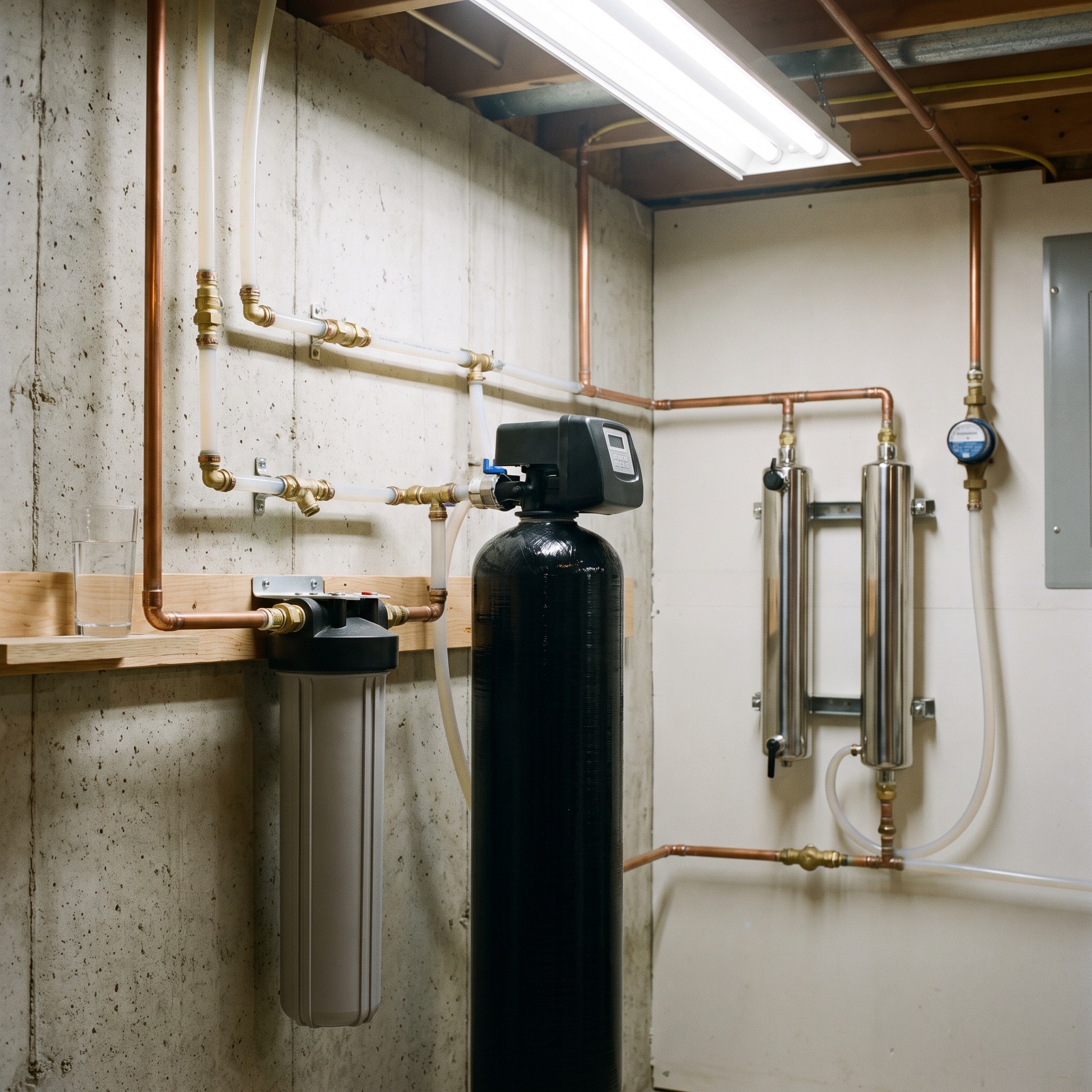
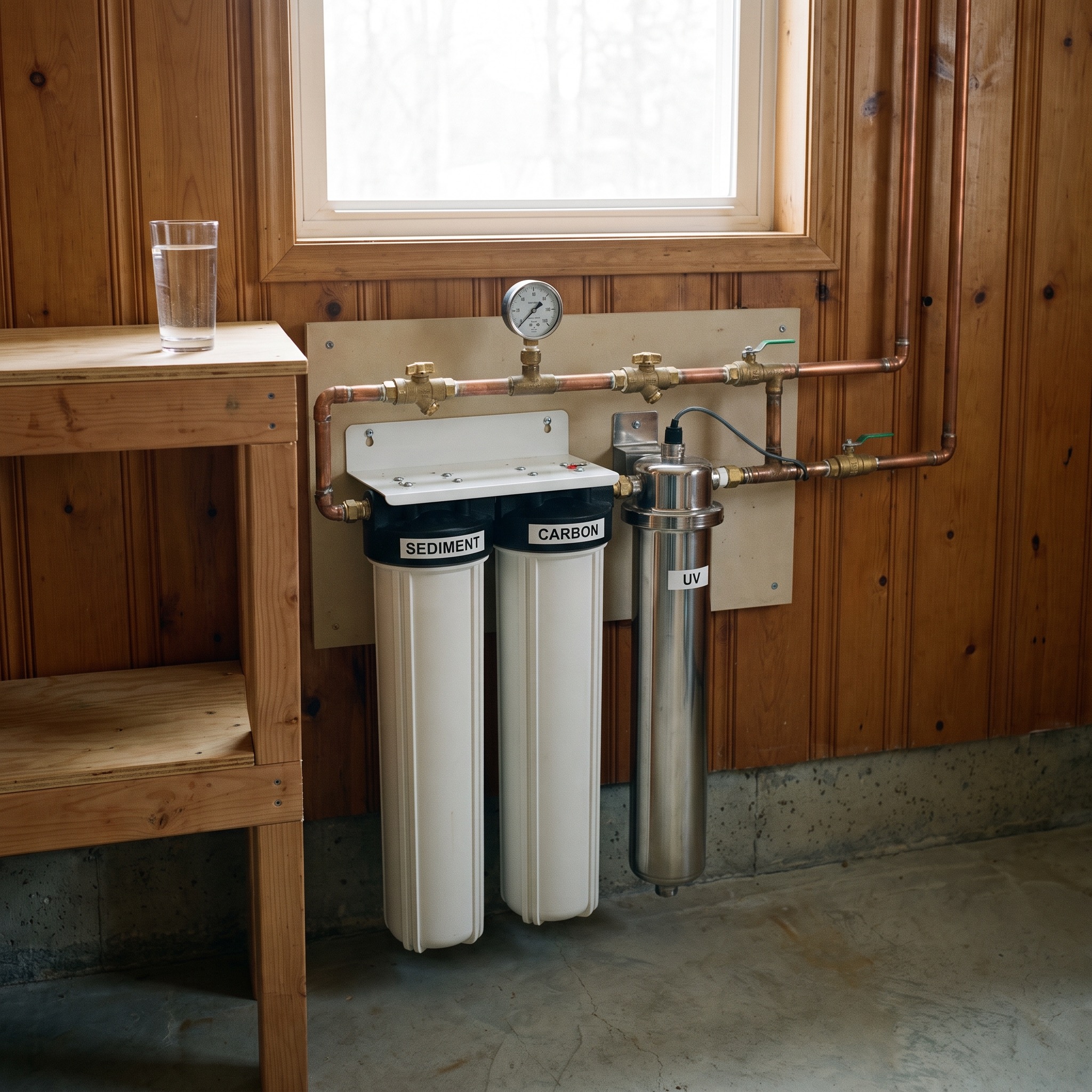
The system works in stages. Water enters the first filter — usually a sediment pre-filter that captures sand, silt, and rust — then flows through additional media depending on what your water test found: activated carbon for chlorine and taste, a softener for hardness, UV for bacteria, an acid neutralizer for low pH. Each stage targets a specific class of contaminant. What goes in your system is determined by what's actually in your water.
For Colorado homes, the question is less whether to filter and morewhat to filter for. The state's supply is clean at the source, but it picks up contaminants on the way to your tap:
- Lead and arsenic
- Pesticides and herbicides
- Radon and uranium
- Industrial chemicals
- Chlorine and disinfection byproducts
The comparison
Whole House vs. Under-Sink Water Filters
Both have their place. An under-sink filter treats the water you drink; a whole house filter treats the water you live with. Here's how they compare:
| Whole House Filter | Under-Sink Filter | |
|---|---|---|
| Installation point | Main water line — treats every tap, shower, and appliance | Under the kitchen sink — treats one tap |
| What it treats | Drinking, cooking, showering, laundry, appliances | Drinking and cooking water only |
| Contaminant range | Sediment, chlorine, hardness, bacteria, pH — depends on stages | Chlorine, taste, lead, PFAS — depends on filter media |
| Skin and hair benefits | Yes — chlorine-free water in every shower | No — only affects the kitchen tap |
| Appliance protection | Yes — scale and sediment protection for water heaters, washers | No — only treats one tap |
| Upfront cost | Higher — multiple stages, main-line installation | Lower — compact, single-point installation |
| Maintenance | Cartridge replacement every 6-12 months per stage | Cartridge replacement every 6-12 months |
| Best for | Homes with water quality issues affecting the whole house | Homes where only drinking water needs improvement |
The technology
Whole House Filter Technologies
Most whole house systems use a combination of these technologies. Which ones go in your home is determined by what a water test finds — not a catalog page.
Water softening
Removes calcium and magnesium with an ion-exchange process. Protects plumbing, improves taste, and prevents scale throughout the home.
Explore water softenersUltraviolet purification
UV light neutralizes bacteria, viruses, and other microorganisms — without adding chemicals. Critical for homes on private wells.
Sediment filters
Capture sand, silt, and rust before they reach finer filters or your fixtures. The first line of defense in any whole-house system.
Carbon filters
Activated carbon adsorbs chlorine, VOCs, and the compounds behind off tastes and odors. Improves water quality at every tap in the house.
Acid neutralizers
Raise the pH of acidic water using calcite media. Acidic water is corrosive to copper plumbing and fixtures over time. Common in Colorado well water.
Why filter the whole house
Benefits of Whole House Water Filtration
Better-tasting water everywhere
Filtered water at every tap — kitchen, bath, laundry — not just the drinking faucet.
Protected plumbing and appliances
Stops scale, sediment, and corrosive water from shortening the life of water heaters, washers, and fixtures.
Healthier skin and hair
Removes the chlorine and chemicals that leave skin dry and hair dull after every shower.
Better-tasting food and drinks
Coffee, tea, ice, and anything made with water picks up the flavor of the water it's made from.
Contaminants reduced at the source
Targets lead, arsenic, VOCs, radon, and other contaminants before they ever reach a tap.
Shower, bath, and laundry upgrade
Soft, clean water on every surface it touches — not only the glass you fill from the kitchen tap.
Colorado water
What Colorado Water Picks Up Before It Reaches Your Tap
Colorado's water starts clean — snowmelt from the Rocky Mountains is some of the best source water in the country. But by the time it reaches your home, it's traveled through miles of distribution infrastructure and picked up contaminants along the way. Municipal treatment adds chlorine to keep water safe in transit, but that chlorine becomes taste and odor issues at the tap. Aging pipes can leach lead and copper. And if you're on a private well, the water hasn't been treated at all — it carries whatever the geology gives it.
A whole house filter is the barrier between what the utility delivers (or what your well produces) and what comes out of your taps. The right combination of stages is what does the work — and that combination depends on your water test results.
- Chlorine and disinfection byproducts from municipal treatment
- Lead and copper leached from aging distribution lines
- Hardness minerals (calcium and magnesium) picked up from rock
- Sediment and rust from older plumbing
- Radon and uranium in well water from geological formations
The difference
Filtered Water Where You Actually Use It
An under-sink filter improves the water you drink. A whole house filter improves the water you live with — every shower, every load of laundry, every glass, every pot of coffee, every meal cooked on the stove.
For most Colorado households, the cumulative effect is bigger than the drinking water improvement alone:
- Showers that don't leave skin dry and hair dull
- Clothes that come out of the wash softer and brighter
- Coffee, tea, and ice that taste like the water they're made from
- Appliances that last closer to their rated lifespan
Maintenance
Whole House Filter Maintenance
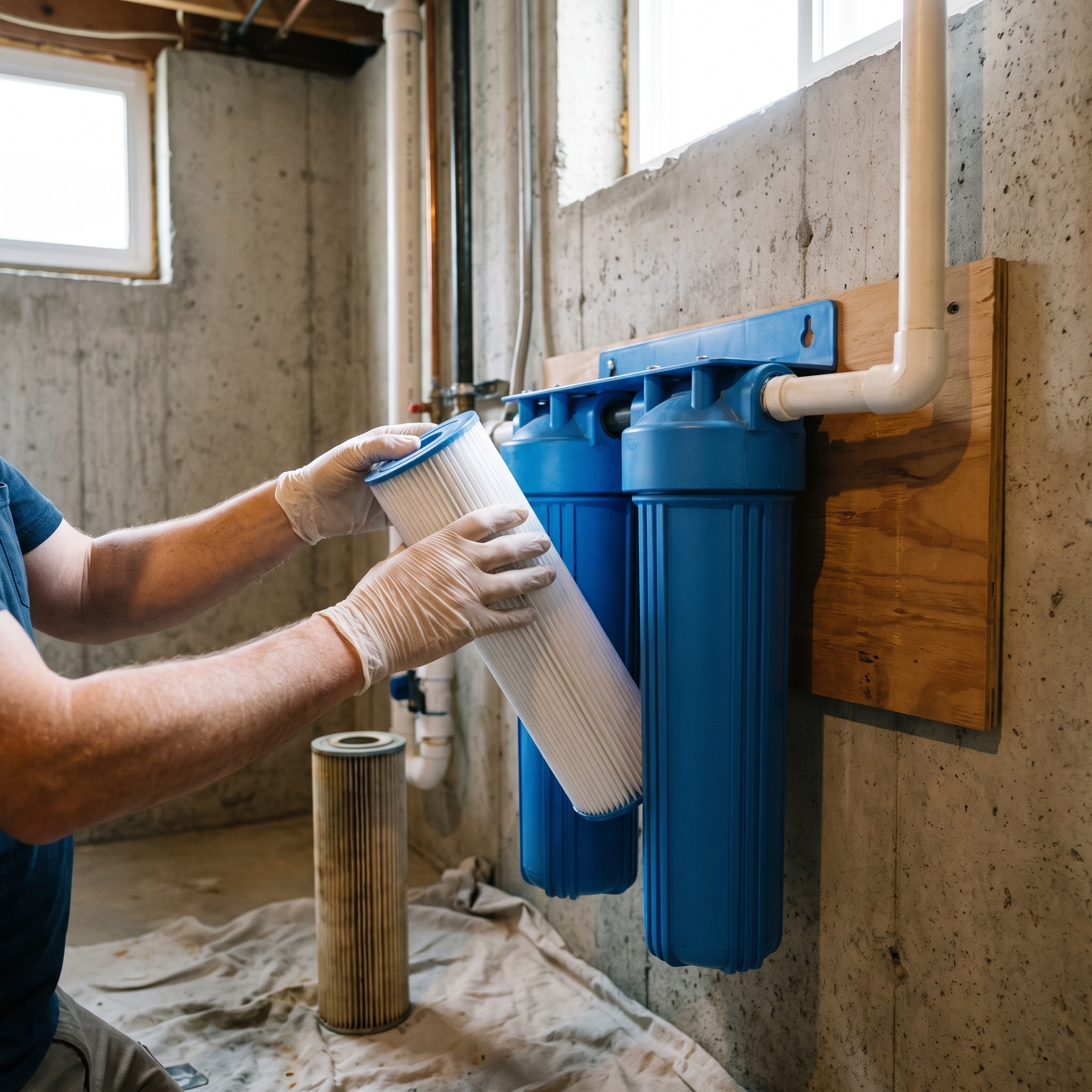
Whole house filters need regular cartridge replacement — that's the main upkeep. Sediment pre-filters typically need swapping every 3-6 months depending on your water's particulate load. Carbon filters last 6-12 months. UV lamps need annual replacement to maintain dose. Specialty media like acid neutralizer calcite may need topping up every few years.
We handle all of it. After installation, we give you the replacement schedule for every stage in your system and send reminders when it's time. If you skip a replacement, the filter doesn't stop working — it just loses effectiveness gradually. No damage, no mess, just a call to us to swap the cartridge.
Cost and value
Cost of a Whole House Water Filter
The cost of a whole house water filter depends on how many stages your system needs, your home's plumbing, and what your water test finds. A basic single-stage system costs less; a multi-stage system with softening, UV, and acid neutralization costs more. The only honest quote comes after a water test and a site assessment.
What most homeowners find is that the per-year cost of running the system is modest — replacement cartridges are the recurring expense, and they're a fraction of what most families spend on bottled water, appliance repairs, and cleaning products that hard water forces you to use more of. We'll explain exactly what you're paying for and why.
Our process
From Water Test to Filtered Water at Every Tap
Every system we install starts with a real test of your water. Here's how the rest unfolds.
Test your water
A water test tells us which contaminants and minerals are actually in your supply, so the system is sized to your water — not someone else's.
Design the right combination
Most Colorado homes need more than one stage. We combine softening, sediment, carbon, UV, and acid neutralization as the test results call for.
Install at the main line
The system is installed where water enters your home, so every fixture, appliance, and tap runs on filtered water from day one.
Maintain and verify
Filter changes, periodic water testing, and system checks keep the water clean — and keep you off the calendar for surprises.
Resources
Whole House Water Filter Spec Sheets & Equipment Data
The spec sheets below are from US Water Systems, Hydronix, and Systematix — among the manufacturers we work with. All have certified performance data. Download to compare media capacities, UV specs, and sizing.
- Calcite Neutralizer Spec SheetUS Water Calcite specifications — pH correction capacity, flow rates, and application data for acidic water treatment.
- Sediment Filter Spec SheetUS Water Filter-Ag Plus media specifications — sediment and particulate removal capacity for whole-house pre-filtration.
- UV Disinfection Spec SheetHydronix UV system specifications for whole-house flow rates — bacteria and virus inactivation capacity and lamp life.
- Whole-House Sizing GuideSystematix sizing guide for whole-house water softeners and GAC filters — match system capacity to your home's daily water volume.
Whole House Water Filter FAQs
What's the difference between a whole house filter and an under-sink filter?
An under-sink filter treats water at one tap — usually the kitchen. A whole house filter is installed at the main water line and treats every tap, shower, and appliance in your home.
How much does a whole house water filter cost in Colorado?
The cost depends on how many stages your system needs, your home's plumbing, and what your water test finds. A basic single-stage system is less than a multi-stage system with softening, UV, and acid neutralization. We size and specify from your water test — the only honest quote comes after we know what's actually in your water.
How often do the filters need to be replaced?
Most whole house filters need cartridge replacement every six to twelve months, depending on the filter type and your water. Sediment filters in harder conditions may need more frequent swaps; carbon and specialty media typically run closer to a year. We give you the exact schedule for your system after installation.
Can I install a whole house water filter myself?
It's possible if you're comfortable with plumbing work, but we generally recommend professional installation. A whole house system ties into your main supply line, and a poor install can leak, lose pressure, or fail to backwash properly. We install to manufacturer spec and verify performance at the tap.
What contaminants can a whole house filter actually remove?
It depends on the media inside it. Carbon handles chlorine, VOCs, and taste/odor; sediment captures rust and particulates; UV neutralizes bacteria and viruses; softeners remove hardness; acid neutralizers raise pH. The right combination is what does the work — and that combination depends on your test results.
Do whole house filters need electricity?
Most media-based stages (carbon, sediment, softener) don't. UV stages do require power, but only a modest amount. We can also specify off-grid options where it matters.
Is a whole house filter the same as a water softener?
No — a water softener specifically removes hardness minerals (calcium and magnesium). A whole house filter can include a softener as one of its stages, but it also handles chlorine, sediment, bacteria, and pH — things a softener alone doesn't address. The two are complementary, not interchangeable.
What does point-of-entry treatment mean?
Point-of-entry (POE) treatment means the system is installed where water enters your home — so every tap, shower, and appliance gets treated water. The EPA's Water Health Series filtration factsheet describes POE systems as those that reduce contaminants and aesthetic issues like scaling, staining, and odor throughout the entire home. Point-of-use (POU) systems, like under-sink filters, treat water at a single tap.
Will a whole house filter give me soft water?
Not unless it includes a water softener stage. A whole house filter with carbon, sediment, and UV stages will give you clean, great-tasting water at every tap — but it won't remove hardness minerals. If you have hard water, we'll add a softener stage or a salt-free conditioner to the system. The water test tells us what you need.
Water Works can be accessed at one of our four convenient locations:
Denver Metro:
Northern Colorado:
Colorado Springs Metro:
Pueblo and S Colorado:
Filtered water at every tap in your home
Talk to a water treatment specialist at any of our four regional offices. We'll test your water, design a system around the results, and install it at the main line so the whole house runs on treated water.
Get a quote- Denver Metro(303) 248-3390
- Northern Colorado(970) 381-4493
- Colorado Springs Metro(719) 694-2650
- Pueblo & S Colorado(719) 836-8118