RO Water for Northeastern Colorado Restaurants: Better Coffee, Better Ice, Better Food
When businesses across the High Plains and mountain communities think about water quality, they often focus on taste or clarity—but the real story runs much deeper. At Water Works, we’ve spent years helping commercial operations understand and solve their water challenges, and there’s one solution that keeps coming up: commercial reverse osmosis in Northeastern Colorado. Whether you’re running a restaurant in Idaho Springs, managing a manufacturing facility outside of Fort Morgan, or operating a brewery along the Front Range, the quality of your incoming water directly impacts your product, your equipment, and your bottom line. Reverse osmosis (RO) is one of the most effective filtration methods available, capable of removing dissolved solids, minerals, chemicals, and contaminants that simpler systems leave behind. In this post, we’ll walk you through what commercial RO is, why it matters for Northeastern Colorado businesses, how to know if you need it, and what to consider when choosing a system. Our team at Water Works has installed and maintained commercial RO systems across the region, and we’re here to share what we’ve learned.
Understanding How Commercial Reverse Osmosis Actually Works
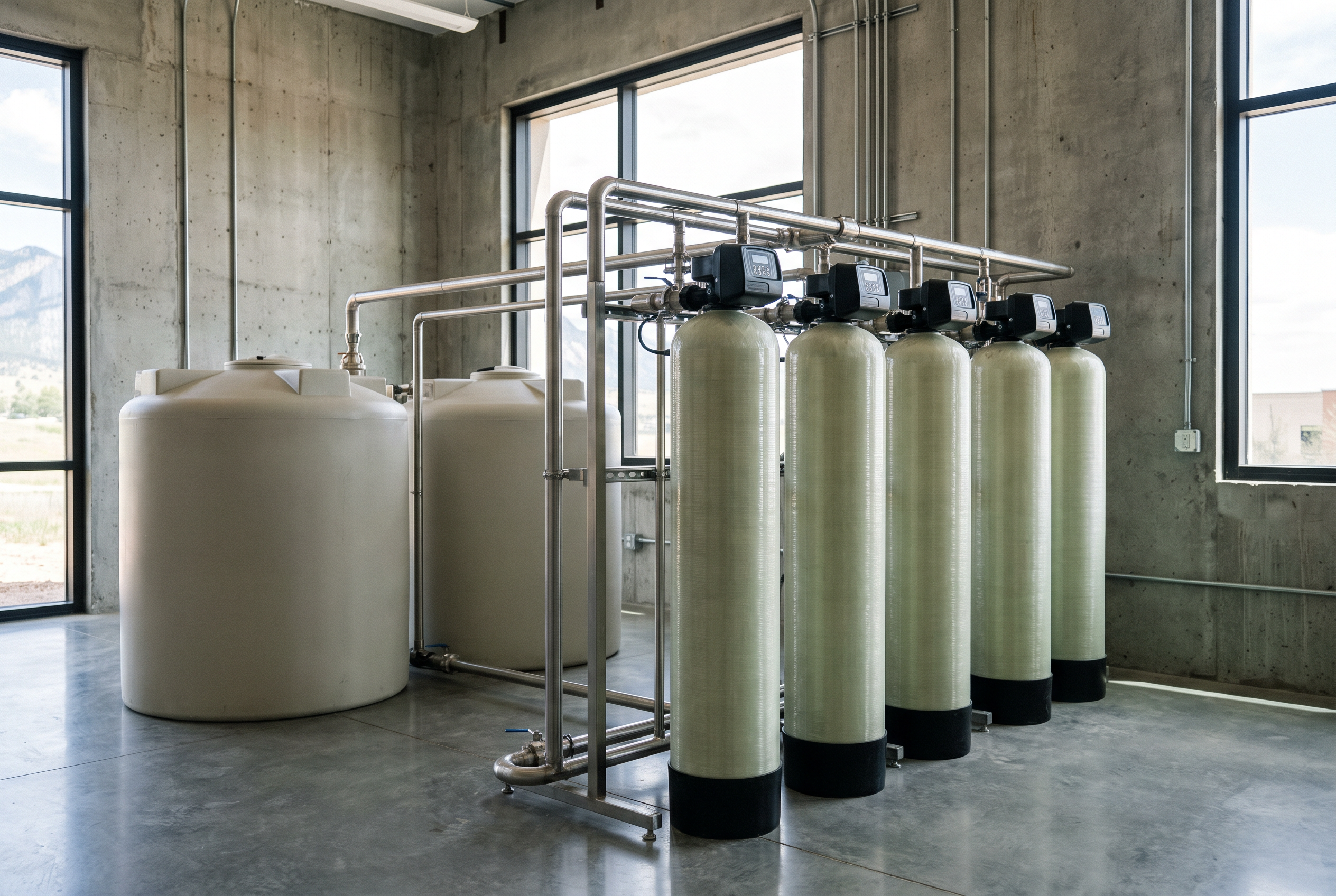
Reverse osmosis is a process that forces water through a semi-permeable membrane under pressure, trapping contaminants on one side while allowing purified water to pass through to the other. At the commercial scale, this process involves multiple stages—typically including pre-filters, the RO membrane itself, and post-filters—that work together to remove up to 99% of total dissolved solids (TDS). Inorganic compounds like lead, arsenic, nitrates, and sulfates are effectively filtered out, as are many organic chemicals and microorganisms. We often explain to our clients in Idaho Springs and throughout the region that commercial RO systems differ from residential ones in capacity, durability, and customization. A commercial system can produce hundreds or thousands of gallons of purified water per day, depending on the configuration. The membranes are larger and designed for continuous operation, and the systems are built to integrate with existing plumbing and storage infrastructure. It’s not a one-size-fits-all product; each installation is tailored to the water profile and daily demand of the specific business. If you’re curious about the broader standards for drinking water treatment, the EPA information on drinking water quality and treatment provides helpful background on what contaminants are regulated and why.
Why Northeastern Colorado’s Water Profile Presents Unique Challenges
Northeastern Colorado has a distinctive water profile that businesses need to understand. Much of the region’s water comes from groundwater sources and runoff that travels through mineral-rich geological formations, picking up high levels of calcium, magnesium, iron, and other dissolved solids along the way. Hard water is a persistent issue across the plains and foothills, and municipal treatment doesn’t always remove dissolved minerals—it simply brings water up to safety standards, which isn’t the same as producing water that’s ideal for commercial use. We’ve worked with facilities across Idaho Springs and the surrounding areas where TDS levels were causing scaling in equipment, off-flavors in food and beverages, and premature wear on plumbing. For businesses that rely on consistent water quality—think food and beverage production, medical and dental offices, car washes, and laboratories—municipal water alone often isn’t enough. The Colorado drinking water quality information from CDPHE is a useful resource for understanding what your local water report shows, but keep in mind that compliance with regulatory standards doesn’t always meet commercial-grade requirements. That’s where a properly sized RO system comes in, giving you control over your water chemistry regardless of what’s coming through the municipal supply or your well.
Key Benefits of Commercial RO for Regional Businesses
The benefits of installing a commercial RO system go well beyond simply improving taste. For food service and hospitality businesses, purified water means consistent product quality—no matter how the municipal supply fluctuates throughout the year. Coffee shops and breweries in Idaho Springs and across the plains have told us that switching to RO improved their output dramatically, because the absence of mineral interference allows the true flavors to come through. For equipment-intensive operations, RO water reduces scale buildup in boilers, ice machines, dishwashers, and cooling towers, extending the life of expensive capital equipment and lowering maintenance costs. Medical and laboratory facilities rely on high-purity water for sterilization and testing processes, where even trace contaminants can skew results or compromise safety. There’s also an efficiency angle: when your water is already pre-purified, your downstream systems—like commercial water softener solutions—don’t work as hard, reducing salt usage and regenerating less frequently. The EPA WaterSense water efficiency resources outline strategies for reducing water waste across commercial operations, and integrating RO into a well-designed system can contribute to those broader sustainability goals. The bottom line is that RO gives your business a predictable, controllable water baseline.
What to Consider When Investing in a Commercial RO System
Choosing the right commercial RO system isn’t as simple as picking the largest unit you can afford. We start every consultation with a water test, because the composition of your incoming water determines what kind of pre-treatment you’ll need before the RO membrane can perform effectively. High sediment levels, chlorine, iron, or hardness can all foul or damage a membrane if not addressed first. Next, we look at daily water demand—how many gallons of purified water does your operation need at peak usage? That number dictates the membrane capacity and storage tank size. Space constraints matter too; some facilities have ample mechanical room, while others need a compact, wall-mounted configuration. Maintenance is another consideration: membranes need periodic cleaning and eventual replacement, and pre-filters require regular changes. We help businesses in Idaho Springs and across Northeastern Colorado plan for these ongoing costs so there are no surprises. We also look at recovery rates—how efficiently the system converts feed water into purified water versus reject water. Modern commercial RO systems can be engineered for higher recovery, which matters in a water-conscious state like Colorado. The right system balances performance, efficiency, and total cost of ownership for your specific operation.
Partnering with Water Works for Your Commercial Water Needs
We’ve built our reputation at Water Works by taking a consultative, engineering-driven approach to commercial water treatment. We don’t just sell equipment—we assess your water, understand your operational needs, and design a system that integrates seamlessly with your facility. Our team has installed commercial reverse osmosis systems across Northeastern Colorado and beyond, from small cafes in Idaho Springs to large industrial operations on the Eastern Plains. We handle everything from initial water testing and system design to installation, maintenance, and ongoing support. We also offer residential water softener systems for business owners who want the same quality at home. If you’re dealing with hard water, scaling, taste issues, or compliance concerns, commercial reverse osmosis in Northeastern Colorado might be the solution you’ve been looking for. We’d welcome the opportunity to test your water and walk you through your options. Give us a call at 303-248-3390 to schedule a consultation, and let’s talk about how we can help your business get the clean, consistent water it deserves.