
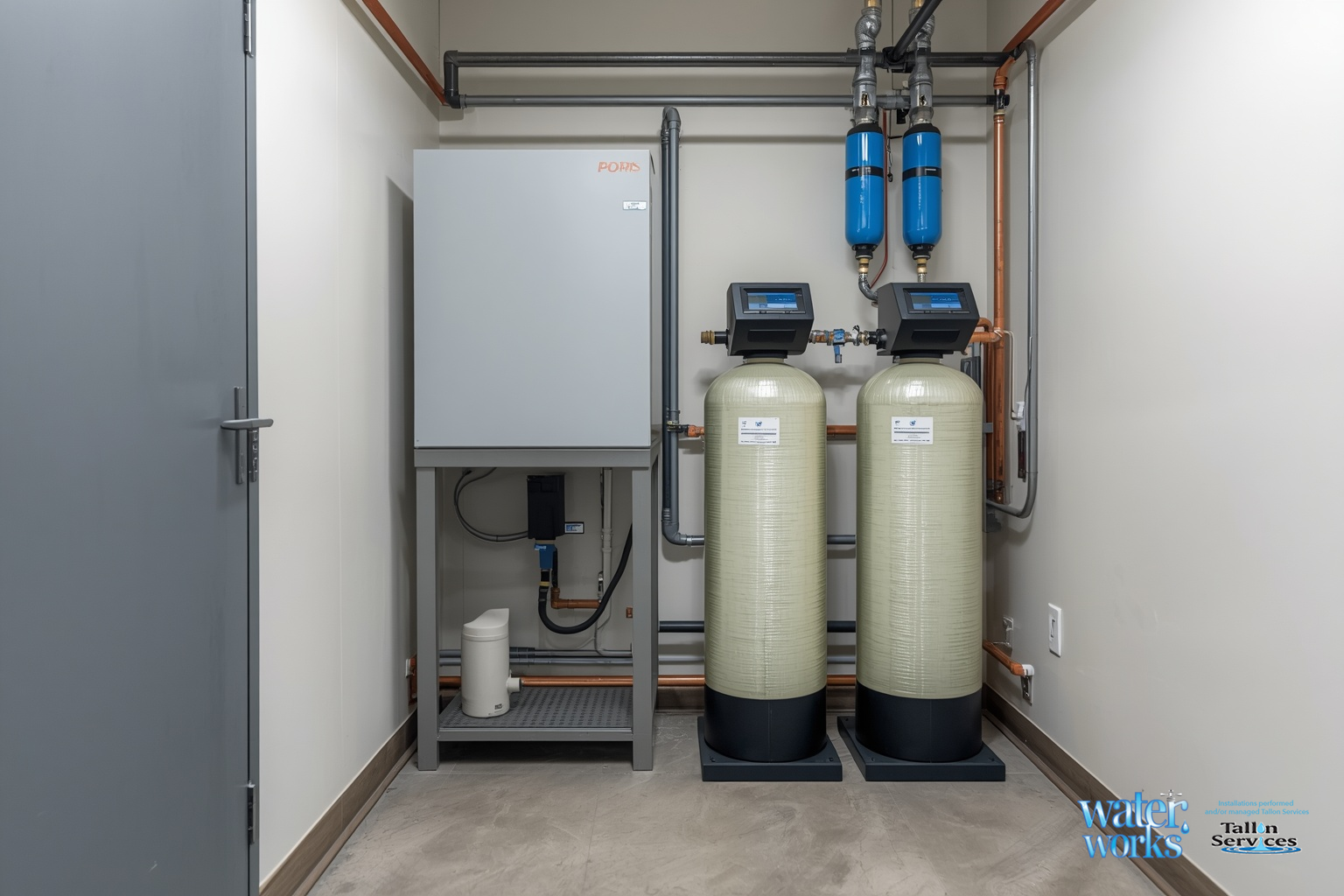
 Commercial Water Softeners
Service area · Wet Mountain Valley
Westcliffe water treatment built for the Wet Mountain Valley
Westcliffe is a small mountain community in Custer County at the foot of the Sangre de Cristos, and most of the homes and ranches here are on private wells drawing from fractured granite and sedimentary aquifers. That geology puts hardness, iron, manganese, and arsenic into the groundwater in their characteristic ratios, and the treatment that actually works here is the treatment designed around what your specific well delivers.

- Wet Mountain ValleyPrivate wells in granite geology
- Hard + ArsenicNaturally occurring in mountain wells
- Free On-Site TestingFree water analysis, scheduled fast
The Wet Mountain Valley water story
Why Westcliffe water needs to be tested — not assumed
Westcliffe sits in the Wet Mountain Valley at the western foot of the Sangre de Cristo range — a small ranching and retiree community where most of the water either comes out of a private well or out of a tap that has traveled through decades of plumbing built for a mountain climate. Both have their own characteristic problems.
Private wells in the Wet Mountain Valley draw from fractured Precambrian granite and overlying sedimentary layers that put hardness, iron, and manganese into the groundwater, with arsenic appearing often enough to matter — it's a natural trace element in the local geology. The aquifer varies enough well by well that two neighbors a mile apart can have meaningfully different water, and spring runoff recharges the shallow aquifers in ways that push sediment and turbidity well above what the same well delivers in late summer.
Rural mountain water systems also come with practical realities the brochures don't mention — longer service runs to outlying ranches, higher elevations that stress equipment, and well casings that haven't been inspected in years. A treatment system designed for someone else's water almost never fits yours. We start every Westcliffe job with a real on-site analysis and design from the results.
- Arsenic from fractured granite and sedimentary aquifers
- Hardness, iron, and manganese at characteristic ratios
- Sulfates from mineral-rich mountain geology
- Disinfection byproducts (bromodichloromethane, chloroform, dibromochloromethane)
- Sediment spikes after spring snowmelt and runoff
- Coliform bacteria in shallow or aging well systems
How Water Works helps
Treatment designed around what your Wet Mountain Valley water actually contains
For most Westcliffe homes and ranches, the right answer is a layered system: a softener at the point of entry to handle hardness and protect appliances, plus a reverse osmosis unit or under-sink filter for the kitchen tap where you actually drink and cook. Wells with iron, manganese, arsenic, or high sulfates usually need a pre-filter or a dedicated arsenic tank ahead of the softener. Shallow wells with coliform concerns often benefit from a UV stage to handle bacteria the softener won't touch.
We design the system, install it, and verify the treated water meets the mark at every tap it's used. Then we come back: well water should be tested at least once a year, and we keep your system serviced and your water verified season after season — across Westcliffe proper, Silver Cliff, and the surrounding Custer County ranches.
- Free on-site water analysis
- Water softeners sized to Wet Mountain Valley hardness
- Reverse osmosis for drinking-water taps
- Iron, manganese, and arsenic filtration
- UV disinfection for bacteria
- Annual testing and ongoing service
Westcliffe water treatment FAQs
Is Westcliffe's tap water safe to drink?
Westcliffe itself runs a small community water system drawing from local wells, and the in-town supply meets regulatory standards. But most outlying homes and ranches in the Wet Mountain Valley are on private wells — and well water isn't regulated the way municipal water is, so there's no required routine testing unless the homeowner arranges it. Arsenic, hardness, iron, and manganese are the headline issues in Custer County groundwater. 'Looks fine' and 'is fine' are not the same thing — only a real on-site analysis tells you what's actually coming out of your tap.
What contaminants are most common in Westcliffe well water?
Wet Mountain Valley wells draw from fractured granite and sedimentary aquifers that put hardness, iron, and manganese into the groundwater in their characteristic ratios. Arsenic shows up often enough to matter — it's a natural trace element in the local geology. We've also seen sulfates, sediment spikes after spring runoff, occasional coliform bacteria in shallow wells, and the disinfection byproducts that form in any chlorinated distribution system (bromodichloromethane, chloroform, dibromochloromethane). The geology varies enough well by well that a real analysis is the only way to know which of these yours has.
How often should I test my water in Westcliffe?
At least once a year for any private well — more often if you've ever had a positive result, if your area has known arsenic or coliform issues, or if your water changes in taste, smell, or color. Spring runoff is a particular concern in the Wet Mountain Valley: snowmelt recharges the shallow aquifers and source water character often changes for several weeks. After flooding, wildfires, or any work on the well or plumbing, test before you drink it. Community-system customers in Westcliffe proper should still test at the tap every few years to catch plumbing-related contamination the utility doesn't see.
Do Westcliffe homes really need a water softener?
Yes. Granite-aquifer water in Custer County is mineral-heavy — hardness is the rule on the Wet Mountain Valley, not the exception. You'll see it as spotting on glassware, scale on faucets and shower glass, and shortened lifespans for water heaters, dishwashers, and washing machines. A softener isn't luxury, it's the difference between appliances that last 15 years and ones that last 6. Salt-free conditioners help with scale, but they don't actually remove the hardness minerals the way a proper ion-exchange softener does.
Can you service my home if I'm outside the town of Westcliffe?
Yes. Our Pueblo and Southern Colorado office covers the Wet Mountain Valley, Silver Cliff, and the surrounding ranches and acreage properties throughout Custer County. Service techs run routes across the region, and on-site well testing and system installation are routine work for our crews — including at the higher elevations and longer service runs that outlying ranch properties typically need.
Get a free water analysis in Westcliffe
Find out what's actually in your water — Westcliffe community supply, outlying ranch well, or older cabin plumbing. We'll test on-site, walk you through the results, and design a treatment system around your source, your household, and your preferences. Schedule with our Pueblo and Southern Colorado office at (719) 836-8118 or any of our four regional locations.
Get a quote- Denver Metro(303) 248-3390
- Northern Colorado(970) 381-4493
- Colorado Springs Metro(719) 694-2650
- Pueblo & S Colorado(719) 836-8118
From the blog
Water Treatment in Westcliffe
Commercial Water Softeners Westcliffe