 Commercial Water Softeners
Service area · I-70 corridor & Blue River
Summit County water treatment built for the high country
Summit County is the high-country heart of the I-70 corridor — the Blue River valley, the Tenmile Range, and the ski towns of Breckenridge, Frisco, Silverthorne, Dillon, Keystone, and Copper Mountain, plus Blue River and Montezuma along the river. Almost every home draws from a private well tapping fractured Precambrian granite and metamorphic rock, and that water is mineral-rich, often acidic, and frequently loaded with iron and manganese. The treatment that actually works here is the treatment designed around what your specific high-country well delivers.

- High CountrySummit County, Blue River valley, Tenmile Range
- Granite AquiferHard, acidic, iron- and manganese-rich well water
- Free On-Site TestFree water analysis, scheduled fast
The Summit County water story
Why high-country well water needs to be tested — not assumed
Summit County runs from the Blue River valley floor around 9,000 feet up through the Tenmile Range and onto the high-alpine slopes of the Continental Divide, with the ski country along I-70 between Dillon and Copper Mountain at its heart. At this elevation there is no central municipal surface-water system to speak of — almost every home, every cabin, and every in-fill subdivision in the county draws from a private well, and the geology under those wells is fractured Precambrian granite and metamorphic rock that releases minerals into the groundwater at predictable but uneven ratios well by well.
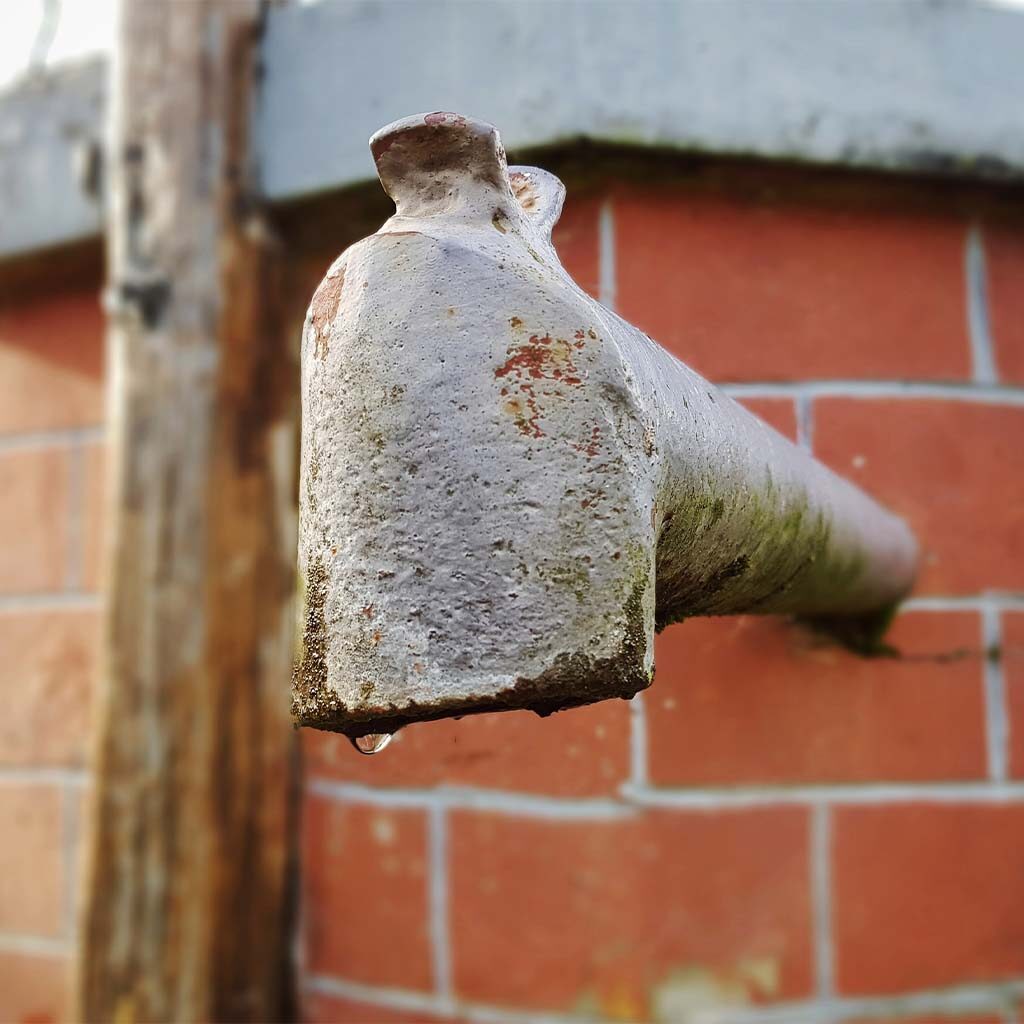
The water that comes out of a Summit County tap is mineral-rich and characteristically acidic. Calcium and magnesium stack up as very hard water, iron comes through as the orange staining homeowners see on faucets and laundry, and manganese shows up as the dark black staining that won't bleach out. Low pH is the part of the high-country water story that sneaks up on homeowners: the water looks fine, but it's quietly corroding copper plumbing and pulling lead from older solder joints behind the walls.
Add in the seasonal swings — turbidity and sediment after the spring snowmelt pulse and the summer monsoon, coliform bacteria in shallow wells that take surface water after a storm, and radon dissolving into groundwater from the surrounding granite — and a treatment system designed for someone else's water almost never fits yours. We start every Summit County job with a real on-site analysis and design from the results.
- Hardness, iron, and manganese from fractured Precambrian granite and metamorphic rock
- Low pH / acidic water that corrodes copper plumbing and leaches lead from solder
- Turbidity and sediment after spring snowmelt and summer monsoon storms
- Coliform bacteria in shallow wells with surface-water infiltration
- Radon in water — a documented high-country contaminant along the Front Range belt
- Frozen-line and deep-winter wellhead stress on properties above 9,000 feet
How Water Works covers Summit County
County-wide service along the I-70 corridor — one route, one crew
Summit County is a regional territory for our Denver Metro office, and the way we cover it matters. Our service techs run scheduled routes along the I-70 corridor and the Blue River valley — a typical day might start with a free water analysis in Breckenridge, move down-valley to a softener-and-neutralizer install in Frisco, and finish with iron-filter service in Silverthorne or a system tune-up in Dillon — all from the same crew, on the same dispatch. That kind of single-day regional routing is what mountain coverage looks like in practice, and it's how we keep on-site testing and installation turnarounds short for high-country homeowners.
The same pattern holds across the rest of the county. Keystone and Copper Mountain sit on the same well-water geology as everywhere else in the valley, and the smaller communities of Blue River and Montezuma are routine service stops along our route. At the county edges we cover Alma — which straddles the Summit / Park County line — and the acreage properties working their way up Hoosier Pass and over toward the Eagle County line. Anywhere on a driveable road in Summit County is well within our working radius, and any home with a well is a candidate for testing and treatment.
- Single-day routes from Breckenridge to Frisco to Silverthorne to Dillon
- Same crew across the I-70 corridor and the Blue River valley
- On-site well testing and full system installation
- Coverage of Copper Mountain, Keystone, Blue River, and Montezuma
- County-edge service into Alma and the Park County line
- Statewide dispatch out of our four regional offices for anything further out
How Water Works helps
Treatment designed around what your high-country well actually contains
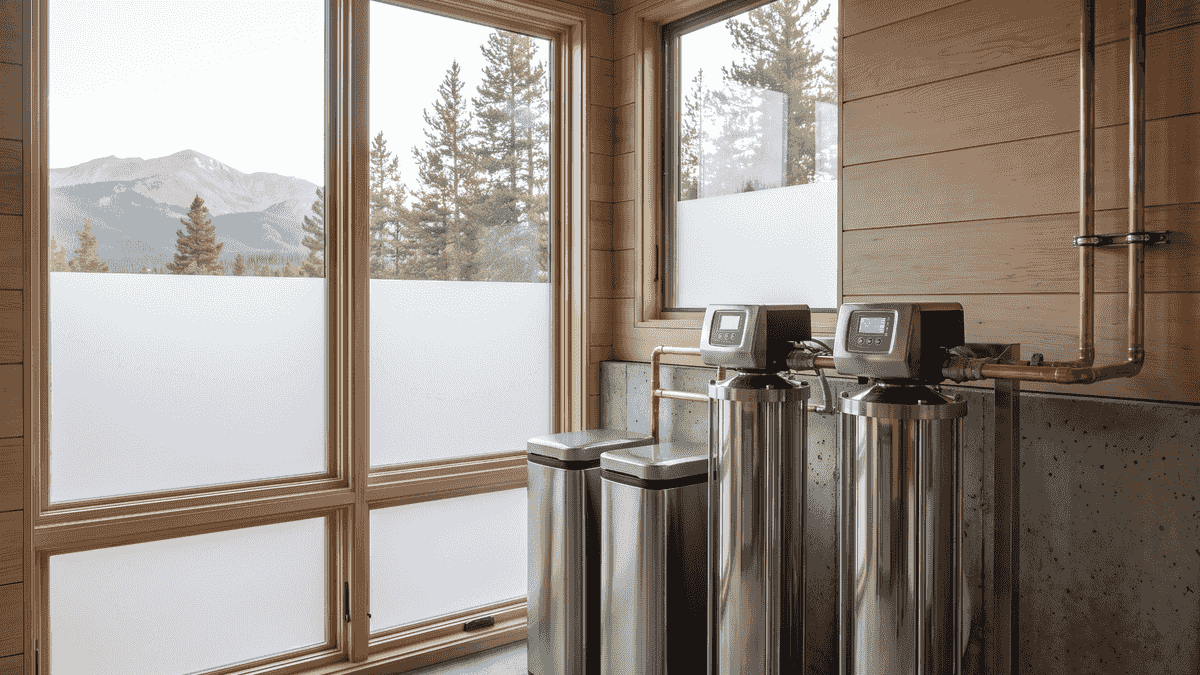
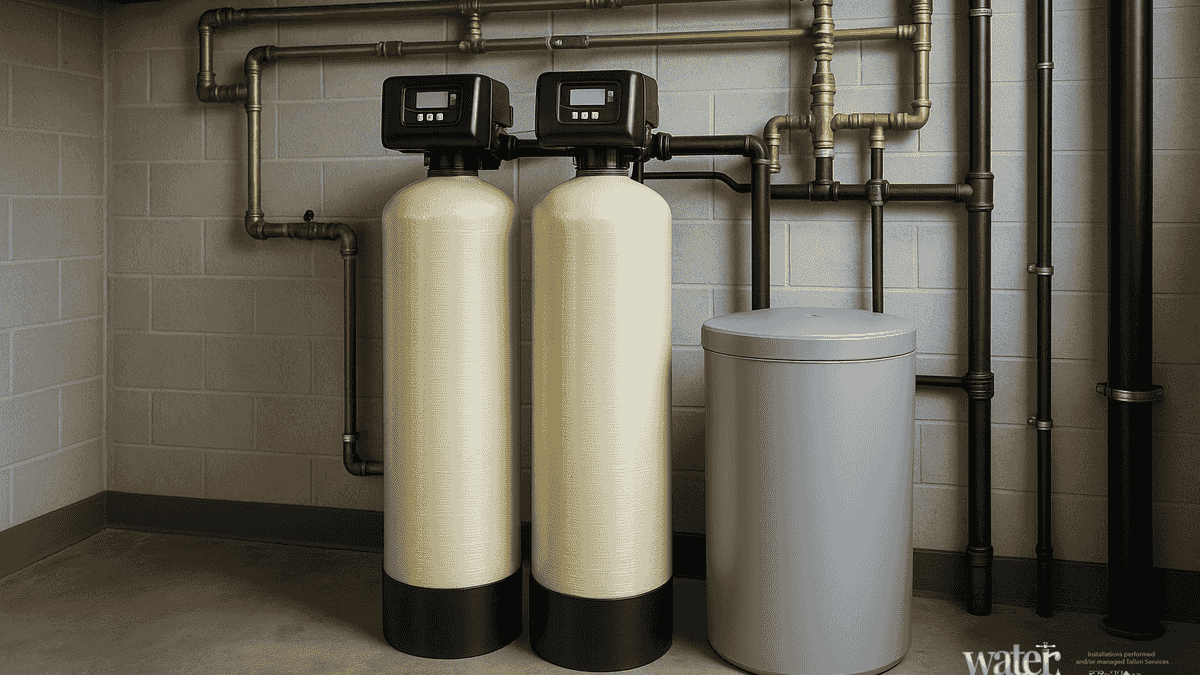
For most Summit County homes, the right answer is a layered system tuned to the high country. A neutralizing calcite tank goes in first to raise the low pH and stop the quiet corrosion of the copper plumbing; an iron and manganese filter sits ahead of the softener to take the staining out; and an ion-exchange softener at the point of entry handles the hardness and protects water heaters and dishwashers from the scale that otherwise shortens their lives at altitude. Wells with radon at treatable levels add an aeration or granular activated carbon stage — paired with proper venting, since the gas has to leave the water before it can leave the house.
Shallow wells with seasonal coliform concerns benefit from a UV stage that handles bacteria the softener and carbon filters won't touch. Drinking water matters separately: a reverse osmosis unit at the kitchen tap pulls out the trace contaminants that whole-house treatment isn't designed to address — radon daughters, residual metals, anything the softener and carbon stages have reduced but not eliminated.
Mountain systems come with realities the brochures don't mention. Well casings here haven't always been inspected in years, pressure systems can run ragged after a deep-freeze event, and equipment sized for the Front Range tends to underperform at 9,000 feet and up. We design the system for the conditions you actually live with, install it, and verify the treated water meets the mark at every tap it's used.
- Free on-site water analysis
- Water softeners sized to Summit County hardness
- Acid neutralizers (calcite tanks) for low-pH water
- Iron and manganese filtration
- UV disinfection for coliform bacteria
- Radon-in-water reduction
- Reverse osmosis for drinking-water taps
- Annual testing and ongoing service
Summit County water treatment FAQs
Is Summit County tap water safe to drink?
There is no central municipal surface-water system serving the high country at this elevation. Virtually every home in Summit County — from Breckenridge and Frisco to Silverthorne, Dillon, Keystone, Copper Mountain, Blue River, and Montezuma — draws from a private well, and well water isn't regulated the way city water is. There's no required routine testing unless the homeowner arranges it. That doesn't automatically make the water unsafe, but it does mean 'looks fine' and 'is fine' are not the same thing. Only a real on-site analysis tells you what's actually coming out of your tap.
What contaminants are most common in Summit County well water?
Summit County wells tap fractured Precambrian granite and metamorphic rock along the Blue River valley and up into the Tenmile Range, and that geology puts hardness, iron, and manganese into the groundwater at characteristic ratios. Hardness is the headline problem — very high, granite-derived — and acidic water (low pH) is the part that sneaks up on homeowners: the water looks fine, but it corrodes copper plumbing and leaches lead from older solder joints. We've also seen turbidity and sediment after spring snowmelt and the summer monsoon, coliform bacteria in shallow wells that take surface water after a storm, and radon dissolving into groundwater from the surrounding rock — the Front Range foothills and high country are a documented radon-in-water belt. A real water analysis is the only way to know which of these yours actually has.
How often should I test my water in Summit County?
At least once a year for any private well in the county — more often if you've ever had a positive result, if your well runs shallow, or if your water changes in taste, smell, or color. The two contaminants that reward consistent annual testing most in Summit County are radon in water and coliform bacteria: both can show up well by well across the Blue River valley, and both vary seasonally in ways a one-time check won't catch. After the spring snowmelt pulse, after summer monsoon storms, after any work on the well or plumbing, or after a deep-freeze event that stresses the wellhead, test again before you trust the tap.
Do Summit County homes really need a water softener?
Yes. Granite-aquifer water in Summit County is mineral-heavy — very hard water is the rule from Breckenridge to Blue River, not the exception. You'll see it as spotting on glassware, scale on faucets and shower glass, shortened lifespans for water heaters, and the orange and black staining on laundry. Most Summit County homes pair the softener with a neutralizing calcite tank to raise the low pH — without that step, the acidic water quietly eats copper plumbing — and many add a dedicated iron filter ahead of the softener. Salt-free conditioners help with scale, but they don't actually remove the hardness minerals the way a proper softener does.
Which Summit County towns do you serve?
Our Denver Metro office covers the entire county. Service techs run scheduled routes along the I-70 corridor and the Blue River valley, with on-site well testing, system design, and installation as routine work in Breckenridge, Frisco, Silverthorne, Dillon, Keystone, Copper Mountain, Blue River, and Montezuma. Out at the county edges we also work Alma (which straddles the Summit / Park County line) and the smaller acreage properties up Hoosier Pass and over toward the Eagle County line. Statewide dispatch out of our four regional offices covers anything further out.
Get a free water analysis in Summit County
Find out what's actually in your high-country well water — Breckenridge chalet, Frisco condo, Silverthorne home, Dillon rental, or Blue River cabin, plus acreage on the Park County line. We'll test on-site, walk you through the results, and design a treatment system around your source and your elevation. Schedule with our Denver Metro office at (303) 248-3390 for fast coverage across Summit County and the I-70 corridor.
Get a quote- Denver Metro(303) 248-3390
- Northern Colorado(970) 381-4493
- Colorado Springs Metro(719) 694-2650
- Pueblo & S Colorado(719) 836-8118
From the blog