 Fort Lupton
Service area · Fort Lupton / South Platte valley
Fort Lupton water treatment built for South Platte valley water
Fort Lupton sits in the South Platte valley in Weld County along the I-76 corridor northeast of Denver, and the water picture is genuinely mixed. Denver Water serves a share of the homes inside the connected town limits, while the surrounding Weld County acreage — farms, ranches, and older homes on the edges of town — draws from private wells tapping the South Platte alluvial aquifer or the deeper Cretaceous-age formations beneath it. Both start hard and iron-bearing, older galvanized plumbing adds lead on the service-line side, and Mountview, Buffalo Ridge, and Country Day have had documented water-quality concerns. The treatment that works here is designed around what your specific source actually delivers.
- South Platte AquiferMixed Denver Water + private wells
- Hard + Iron + ArsenicCommon in older home plumbing
- Free On-Site TestingFree water analysis, scheduled fast
The South Platte valley water story
Why Fort Lupton water needs to be tested — not assumed
Fort Lupton sits in the South Platte valley in Weld County along the I-76 corridor northeast of Denver. The water picture inside the town is genuinely mixed. Denver Water serves a share of the connected addresses inside the town limits and the growing neighborhoods on the edges of town — that supply is professionally treated and tested on a published schedule. But many of the established homes and almost every acreage and farm property in the surrounding Weld County countryside draw from private wells tapping the South Platte alluvial aquifer or the deeper formations beneath it, and those wells aren't regulated the way municipal water is.
Both sources start hard and iron-bearing. Local testing has flagged arsenic, bromodichloromethane, chloroform, and dibromochloromethane in some samples — the trace metals and disinfection byproducts that show up around the corridor. Nitrates from fertilizer and feedlot runoff appear where irrigated cropland sits upgradient of a wellhead, and coliform bacteria are an event-driven problem — heavy rain, snowmelt, or a South Platte runoff pulse pushes surface contamination down and shallow wells feel it first. Older galvanized plumbing common to many established Fort Lupton homes adds lead on top of whatever the source delivers.
Neighborhoods like Mountview, Buffalo Ridge, and Country Day have had documented water-quality concerns, and the profile shifts well by well across the surrounding Weld County acreage. We start every Fort Lupton job with a real on-site analysis.
- Hardness, iron, and manganese from the South Platte alluvial aquifer
- Arsenic and disinfection byproducts in local testing
- Nitrates from fertilizer and feedlot runoff across Weld County
- Lead and manganese from older galvanized service lines
- Coliform bacteria in shallow wells after heavy rain or runoff
- Sediment from aging well casings on acreage and farm taps
How Water Works helps
Treatment designed around what your Fort Lupton water actually contains
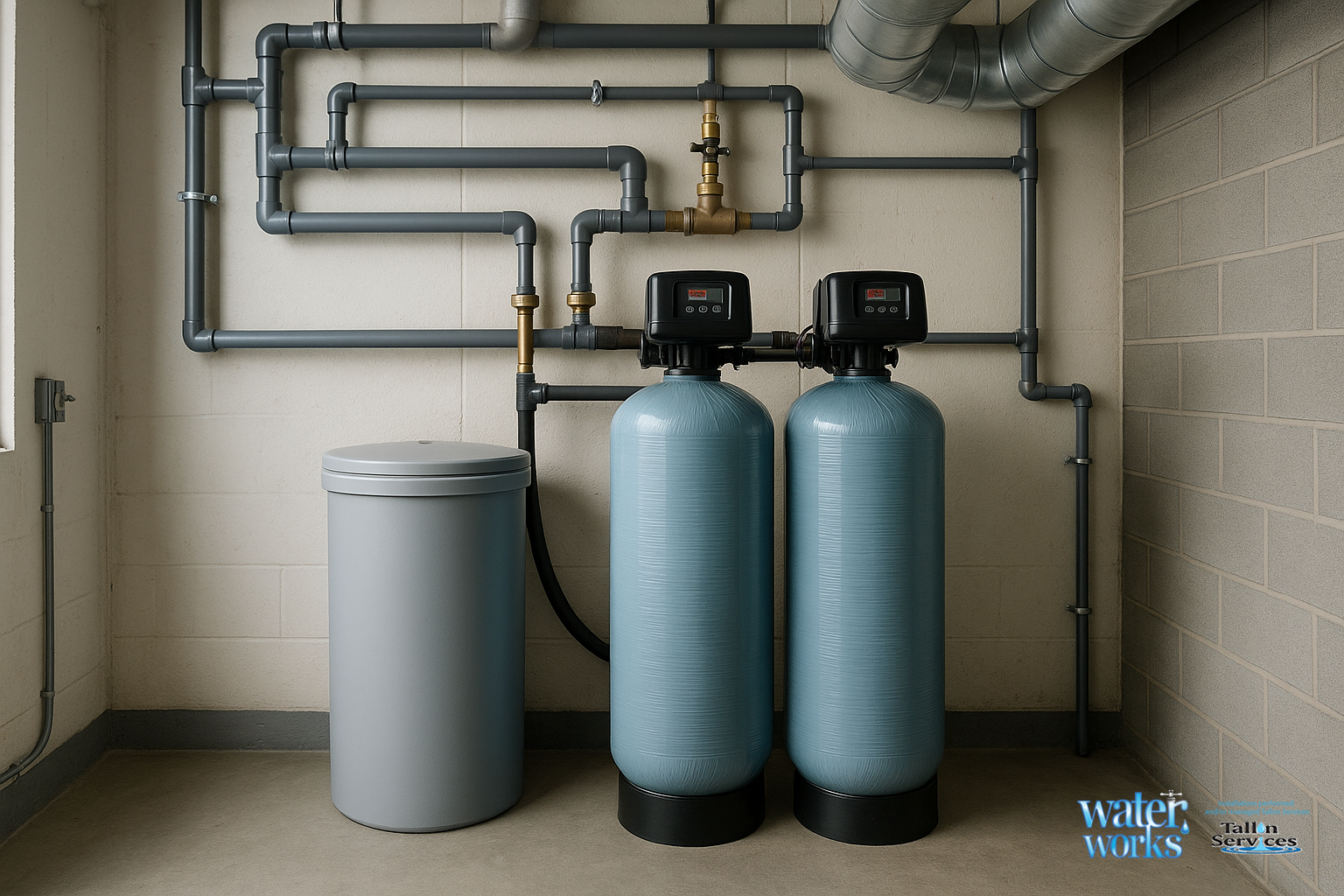
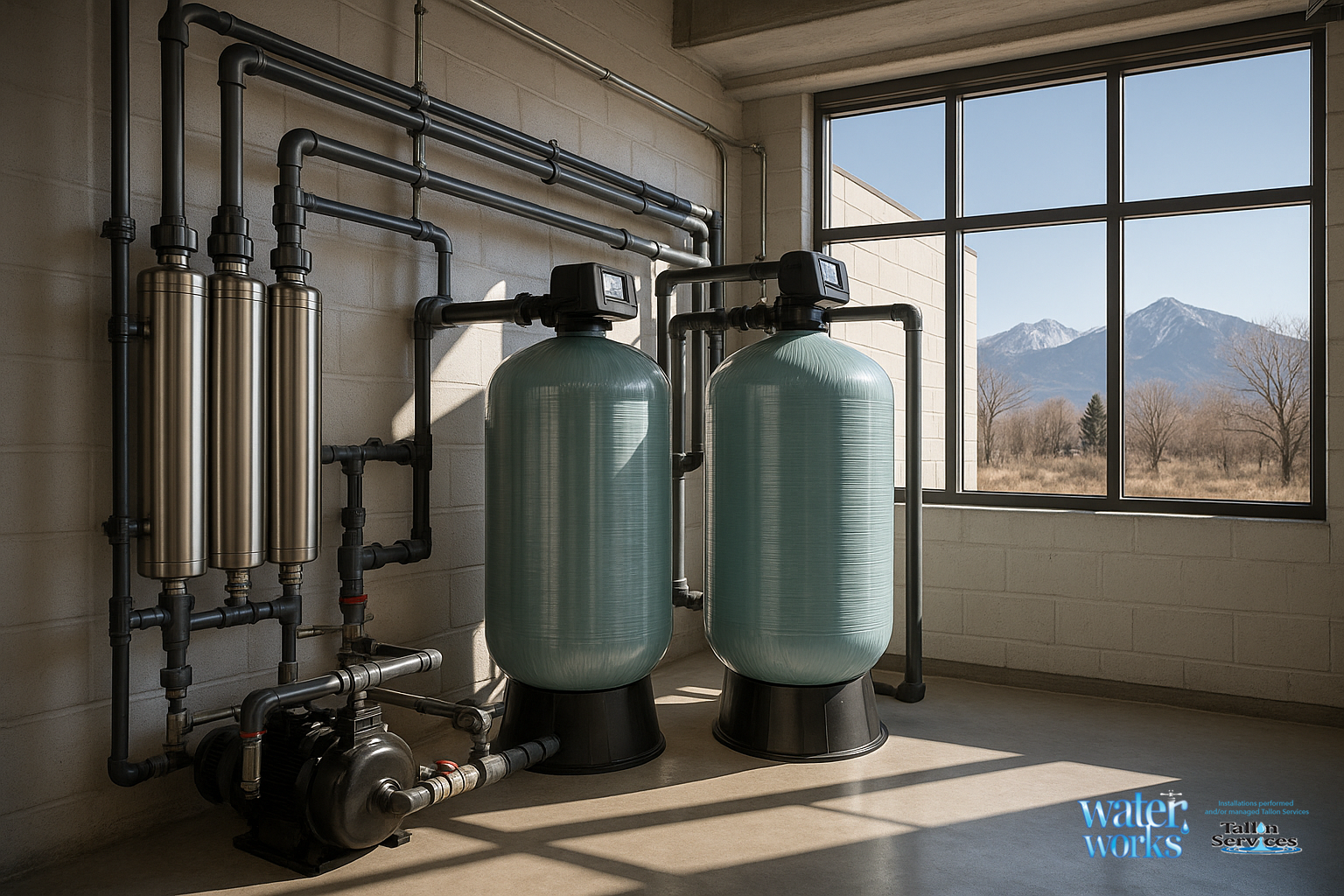
For most Fort Lupton homes, the right answer is a layered system sized to the actual source. A softener at the point of entry handles the South Platte hardness and protects the water heater, dishwasher, washing machine, and the rest of the appliances downstream — on South Platte water the difference between a properly sized softener and an undersized one shows up within months. Wells with iron, manganese, or arsenic need a dedicated oxidation or greensand stage ahead of the softener, sized for that well.
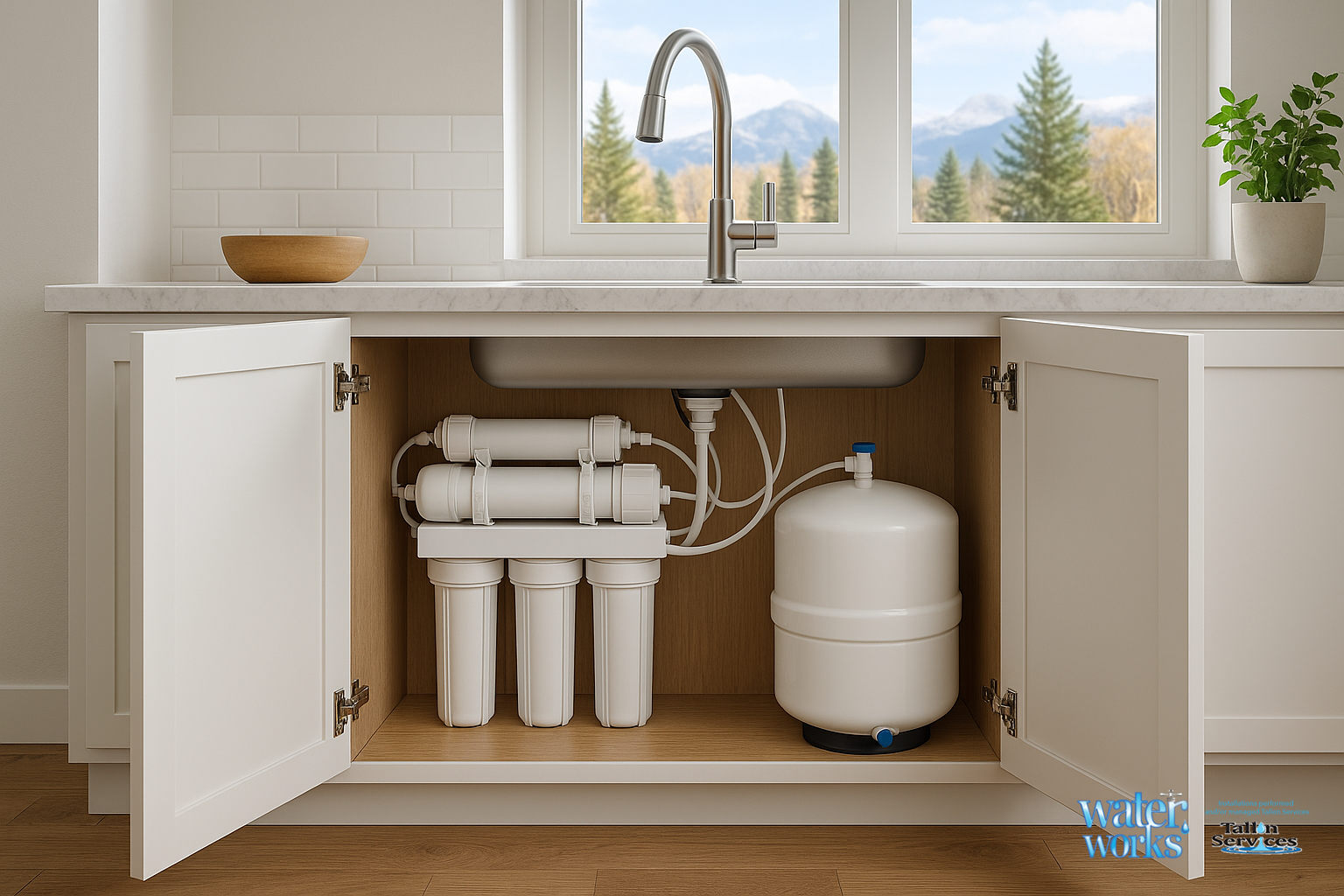
Drinking water matters separately. A reverse osmosis unit at the kitchen tap pulls out the trace contaminants whole-house treatment isn't designed to address — arsenic residuals, disinfection byproducts, nitrate, lead. Homes on Denver Water service benefit from point-of-use lead reduction at the kitchen tap, since older galvanized service lines common to established Fort Lupton neighborhoods can put lead into the water after it leaves the main. Properties with coliform risk pair the system with a UV stage so bacteria don't make it to the tap.
- Free on-site water analysis
- Water softeners sized to South Platte hardness
- Iron, manganese, and arsenic filtration
- Reverse osmosis for drinking-water taps
- Point-of-use lead reduction for older galvanized plumbing
- UV disinfection for bacteria
Coverage across the South Platte valley
Service routes along the I-76 corridor out of the Northern Colorado office
Fort Lupton's position on the map is what determines how service routes to it. The town sits in the South Platte valley in Weld County along the I-76 corridor northeast of Denver — close enough that the Northern Colorado office treats the run as a routine day, and far enough out that almost every acreage and farm customer on the edges of town is on a private well. Our service techs run the I-76 corridor from the Northern Colorado office, with Fort Lupton as a natural stop between Hudson to the east and the Weld County acreage to the north and south.
Coverage out of the Northern Colorado office runs the full South Platte valley reach. East along I-76 to Hudson and Fort Morgan, with the connected acreage and farm properties scattered across northern Weld County and the western edge of Morgan County. South toward Strasburg and the I-70 corridor, where Eastern Plains coverage overlaps with the routes our Denver-area crews also run. On-site well testing, softener and RO installs, iron, manganese, and arsenic filtration, and point-of-use lead reduction for older galvanized service lines are routine jobs for that crew. Statewide dispatch covers the further-out ranches east along the I-76 corridor.
What South Platte valley installs require is a little different from in-town Denver Metro work. Larger acreage and farm properties run higher treatment demand — bigger service flow, more outbuildings, longer runs between the wellhead and the house. Our techs size softeners, iron and manganese filters, arsenic reduction stages, and reverse osmosis units to the actual source and household, and keep every install on an annual testing cycle.
- Northern Colorado office — south from Fort Lupton along I-76 into Weld County
- East along I-76 to Hudson, Fort Morgan, and the connected Eastern Plains acreage
- South toward Strasburg and the I-70 corridor for the wider Eastern Plains reach
- On-site well testing, softener installs, and RO work on acreage and farm properties
- Point-of-use lead reduction for older galvanized service lines
- Annual testing programs across the South Platte valley
Fort Lupton water treatment FAQs
Is Fort Lupton's tap water safe to drink?
It depends on where the water actually comes from. Fort Lupton sits in the South Platte valley in Weld County, and the supply picture is a mix — Denver Water serves a meaningful share of the homes inside the connected town limits, while the rest draw from private wells tapping the South Platte alluvial aquifer or the deeper Cretaceous-age formations beneath it. Denver Water's supply is professionally treated and tested, but 'safe by the standard' and 'good at your kitchen sink' aren't always the same thing once the water has traveled through older service lines and household plumbing. Private wells aren't regulated that way at all. The only way to know what's coming out of your specific tap is a real on-site analysis.
What contaminants are most common in Fort Lupton well water?
South Platte alluvial wells in the Fort Lupton area put hardness, iron, and manganese into the groundwater at characteristic ratios. Local testing has flagged arsenic, bromodichloromethane, chloroform, and dibromochloromethane in some samples, and nitrate, manganese, lead, and total coliform bacteria show up often enough to matter where shallow wells sit close to irrigated cropland or older galvanized plumbing. Mountview, Buffalo Ridge, and Country Day have had documented water-quality concerns, and the profile shifts well by well across the surrounding Weld County acreage. A genuine on-site analysis is the only way to know which of these your specific well actually has.
How often should I test my water in Fort Lupton?
At least once a year for any private well — more often if you've had a positive result, your well sits shallow, your address is on older galvanized service lines, or your water changes in taste, smell, or color. Nitrates and coliform are the two contaminants we test for most often in the South Platte valley, and both reward consistent annual testing. After heavy rain, the spring runoff pulse on the South Platte, any work on the well or plumbing, or any major land-use change upgradient of your wellhead, test before you drink it. Even homes on Denver Water service benefit from a periodic point-of-use check, because older galvanized plumbing can put lead into the water after it leaves the main.
Do Fort Lupton homes really need a water softener?
Yes. South Platte alluvial groundwater in the Fort Lupton area is hard by nature. You'll see it as spotting on glassware, scale on faucets and shower glass, and shortened lifespans for water heaters, dishwashers, washing machines, and ice makers. Older galvanized plumbing common to many established Fort Lupton homes makes hardness worse — scale builds up inside the pipes and reduces flow, and the corrosion byproducts show up as reddish and dark staining on fixtures and laundry. A softener isn't luxury; it's the difference between appliances that last 15 years and ones that last 6. Salt-free conditioners help with scale, but they don't actually remove the hardness minerals the way a proper ion-exchange softener does.
Can you service my home outside of Fort Lupton?
Yes. Our Northern Colorado office covers Fort Lupton and the surrounding South Platte valley communities along the I-76 corridor — Hudson, Platteville, and the connected Weld County acreage — and our service techs run scheduled routes year-round. Coverage also runs east along I-76 to Fort Morgan and south toward Strasburg and the Eastern Plains, all dispatched from the same office. On-site well testing, softener installs, iron and manganese filtration, and reverse osmosis work on acreage properties and farm taps are routine jobs for that crew. Statewide dispatch out of our four regional offices covers anything further out.
Get a free water analysis in Fort Lupton
Find out what's actually in your water — Denver Water service, private well on the South Platte alluvial aquifer, or older galvanized plumbing that needs point-of-use lead reduction. We'll test on-site, walk you through the results, and design a system around your source. Reach the Northern Colorado office at (970) 381-4493, or use statewide dispatch through any of our four regional offices.
Get a quote- Denver Metro(303) 248-3390
- Northern Colorado(970) 381-4493
- Colorado Springs Metro(719) 694-2650
- Pueblo & S Colorado(719) 836-8118
From the blog