 Residential Water Purification
Service area · Elbert County & the Front Range foothills
Elizabeth water treatment built for Elbert County's foothill-to-plains transition
Elizabeth is the town seat of Elbert County — a small Front Range community where in-town municipal service gives way, fast, to private wells on 2- to 35-acre horse and cattle parcels. The geology underneath both is the same: foothills granite giving way to the Plains, and the water that comes out of it carries granite-derived hardness, iron, manganese, low pH, and — the issue that surprises people here the most — radon-222 dissolved from the same rock. The treatment that actually works in Elizabeth is the treatment designed around what Elbert County wells and town water actually deliver at your address.
- Elbert County SeatTown water plus private wells on 2–35 acre parcels
- Radon-in-Water BeltDocumented Front Range foothills granite source
- Free On-Site TestingFree water analysis, scheduled fast
The Elizabeth water story
Why Elizabeth water needs to be tested — not assumed
Elizabeth sits where the Front Range foothills step down into the Eastern Plains — the transition zone, with ponderosa pine and rolling grassland in roughly equal measure, and a geology underfoot that is half granite, half sedimentary. The town itself has a municipal supply that draws from Denver Basin wells and interconnects; the moment you cross the town line, you cross into private-well country, and most of the larger parcels around Elizabeth are on wells tapping the same fractured granite and overlying sediment that the town itself draws from.
That geology gives Elbert County water a recognizable signature. Granite is slow to dissolve, but what does dissolve is acidic — which is why wells from this area routinely come back with low pH, and why copper plumbing in older homes can pinhole over the years without an obvious cause. The same rock is the source of the iron and manganese the area is known for, and the same rock is the reason radon-222 shows up in well water here often enough that the Colorado Department of Public Health and Environment has mapped parts of the Front Range foothills — including the belt that runs through Elbert County — as elevated radon-in-water territory. When you drink your tap water, you inhale a fraction of the radon it carries; the long- term exposure is the issue, and most homes never know it's there unless they test.
Out where the acreages start, the picture layers on: horse and cattle properties concentrate waste faster than the soil breaks it down, and nitrates follow. Shallow wells can run coliform after a wet spring or a heavy Palmer Divide thunderstorm. A treatment system designed for someone else's water almost never fits yours, and a rural Elbert County well is the textbook case. We start every Elizabeth job with a real on-site analysis — radon in water included — and design from the results, block by block.
- Radon-222 dissolved in water — a documented Front Range foothills concern
- Hardness, iron, and manganese common in Elbert County wells
- Low pH / acidic water that corrodes copper plumbing over time
- Nitrates from livestock on horse and cattle acreage properties
- Coliform bacteria in shallow wells after runoff or spring snowmelt
- Lead and copper leached from older galvanized and brass plumbing
How Water Works helps
Treatment designed around what your Elizabeth water actually contains
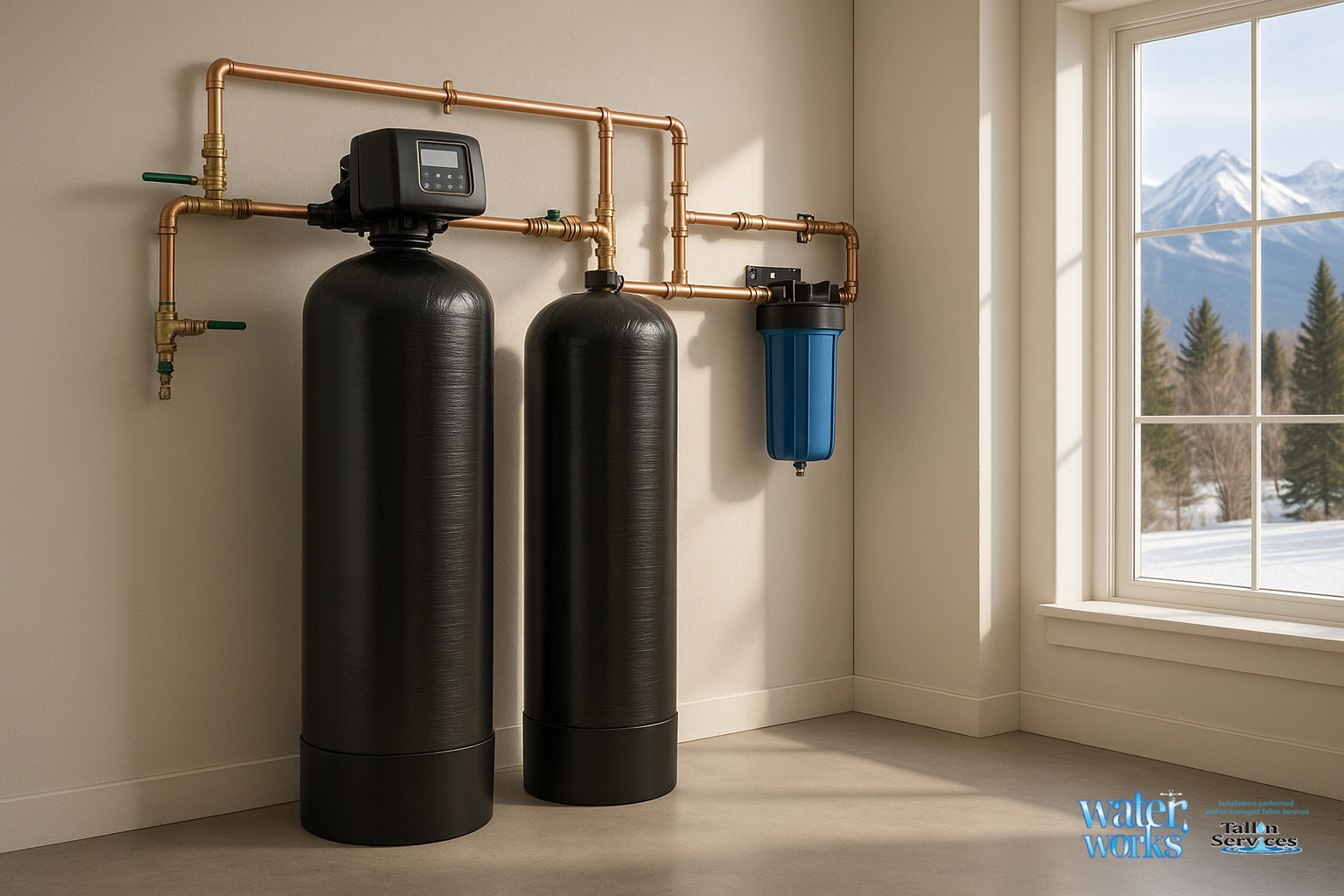
For most Elizabeth homes — both in-town and on the surrounding acreages — the right answer is a layered system tuned to what an actual sample at your address says. A softener at the point of entry handles the foothills hardness and protects appliances; an acid neutralizer (calcite or cor-seex media) ahead of it raises pH out of the corrosive range so the softener, the water heater, and the copper plumbing stop taking abuse. Wells with iron or manganese add a greensand or catalytic-carbon pre-filter in front of the pair. A reverse osmosis unit or under-sink filter at the kitchen tap handles the drinking-and-cooking water where the family actually consumes it.
Radon in water is the one the standard menu misses. Aeration or granular-activated-carbon treatment at the point of entry reduces radon-222 to background levels — that's a real system, sized to your well's flow rate, and it's a routine add to the standard Elizabeth install. We design the system, install it, and verify the treated water meets the mark at every tap it's used. Then we come back: well water should be tested at least once a year, and we keep your system serviced and your water verified season after season — including a radon check whenever you want peace of mind, after a drought cycle that drops the water table, or after any work on the well, pump, or plumbing.
- Free on-site water analysis, radon-222 included
- Water softeners sized to foothills hardness
- Acid neutralizer for low-pH / acidic well water
- Iron and manganese filtration
- Reverse osmosis at the kitchen tap
- Annual testing and ongoing service
Coverage across the transition zone
Both sides of the Front Range, routing into your acreage
Elizabeth's position on the map is what determines how we route service to it. The town sits exactly between two regional offices, and we use that geography deliberately: our Colorado Springs Metro office sends techs north and east up through Peyton, Calhan, and into Kiowa and Elbert, and our Denver Metro office sends techs south along the Kiowa Creek and Highway 86 corridors into Franktown and the Ponderosa Park communities. From either direction, a scheduled service run into Elizabeth is a normal day, not a special trip.
That matters more on acreage properties than people expect. Larger horse and cattle parcels run higher treatment demand — bigger service flow, more bathrooms and barns on the same plumbing, longer runs between the wellhead and the house — and the right system for a 5-acre Elizabeth lot is rarely the right system for a 35-acre one. Our techs size softeners, neutralizers, and pre-filters to the actual well, the actual household, and the actual number of heads (human and otherwise) on the system, not a generic spec.
For homes inside the town limits on municipal water, the same technicians still handle chlorine taste, sediment at the meter, and the lead-and-copper check older homes should run every few years anyway. The town supply meets its standards; what reaches the kitchen tap depends on the plumbing between the meter and the sink, and that's where on-site treatment earns its keep.
- Colorado Springs Metro office — south and east toward Elbert County
- Denver Metro office — south along the Front Range transition zone
- Scheduled routes to Kiowa, Elbert, Peyton, Franktown, and Ponderosa Park
- On-site radon-in-water sampling and treatment design
- Larger service flow for horse and cattle acreage properties
- Annual testing programs across the county
Elizabeth water treatment FAQs
Is Elizabeth's tap water safe to drink?
It depends on where your water comes from. In-town Elizabeth is partially served by the Town of Elizabeth, which gets its supply from a mix of Denver Basin wells and interconnects that supply treated water meeting federal standards — the utility does the work and publishes an annual water quality report. Out on the surrounding acreages — and across most of unincorporated Elbert County — homes are almost entirely on private wells, and the utility does not see that water at all. Hardness, iron, manganese, low pH, nitrates from livestock, and radon-222 dissolved out of Front Range foothills granite all show up on Elbert County wells often enough that we routinely treat them. Safe at the meter and safe at your kitchen tap are not the same thing — only a real on-site analysis tells you what's actually coming out.
What contaminants are most common in Elizabeth well water?
The Front Range foothills south of Denver — including the Elizabeth, Kiowa, and Elbert area — sit on a documented radon-in-water belt, and radon-222 dissolved in well water is the contaminant that surprises people here the most. Beyond that, Elbert County wells routinely test high for hardness, iron, and manganese; carry a low, acidic pH because of the granite-derived geology along the transition zone into the plains; and pick up nitrates on horse and cattle properties where livestock concentration outpaces what the soil can hold. Shallow wells can show coliform bacteria after heavy runoff or spring snowmelt, and older homes on the original plumbing can still leach lead and copper from galvanized service lines and brass fixtures behind the pressure tank. A genuine on-site analysis tells you which of these yours actually has — the same road can deliver very different water half a mile apart.
How often should I test my water in Elizabeth?
At least once a year for any private well — and that includes a radon-in-water test, which is not optional in this part of Elbert County. Radon in water is a chronic-exposure concern rather than an acute one, so a single reading is enough to establish your baseline, but if your well sits in the foothills granitics or you drink your tap water unfiltered, you want to know it. After drought cycles that drop the water table, after spring runoff that pushes surface water into shallow wells, and after any work on the well or plumbing, test before you drink it. If you've ever had a positive result for nitrates, coliform, or any metal, push that cadence to twice a year — and municipal customers on the town's supply should still retest at the tap every few years to catch plumbing-side contamination the utility doesn't see.
Do Elizabeth homes really need a water softener?
Yes. Elbert County sits in the Front Range foothills and the data backs it up — hardness on the Elizabeth side of the county commonly runs high enough to etch glassware and shorten appliance life in just a few years. A softener isn't luxury, it's the difference between appliances that last 15 years and ones that last 6. The acidic water common in the same wells adds a second concern: low pH slowly corrodes copper plumbing, pinholes pipes, and pulls metal into the water you drink. The standard pairing on an Elbert County well is a softener plus an acid neutralizer (calcite or cor-seex) to fix both at once — the neutralizer raises pH to a non-corrosive range so the softener and your pipes stop taking abuse. Salt-free conditioners help with scale on surfaces but don't remove the hardness and don't raise pH, so they don't replace the pair.
Can you service my home outside of Elizabeth?
Yes. Our Colorado Springs Metro and Denver offices both cover Elizabeth, with regular service routes running from both directions across the Front Range transition zone. That puts Kiowa, Elbert, Peyton, Franktown, and the Ponderosa Park communities inside our everyday coverage, and Falcon and Calhan within a routine service day. On-site well testing, radon-in-water sampling, softener and neutralizer installs, and reverse osmosis work on acreage properties are routine jobs for those crews — including on the larger horse and cattle parcels where service flow, treatment demand, and the contamination profile all run higher than in-town averages.
Get a free water analysis in Elizabeth
Find out what's actually in your water — Denver Basin town supply, foothills private well, or acreage property on its own well. We'll test on-site, walk you through the results — including radon-222 if your well warrants it — and design a treatment system around your source, your household, and your preferences. Reach the Colorado Springs Metro office at (719) 694-2650, or the Denver Metro office at (303) 248-3390; both cover Elizabeth and the surrounding Elbert County communities.
Get a quote- Denver Metro(303) 248-3390
- Northern Colorado(970) 381-4493
- Colorado Springs Metro(719) 694-2650
- Pueblo & S Colorado(719) 836-8118
From the blog