 Broomfield
Service area · Centennial / South Denver Metro
Water treatment in Centennial for south-metro homes
Centennial is a south-Denver suburb of roughly 110,000 in Arapahoe County — stitched from older unincorporated neighborhoods and newer subdivisions east of I-25. Most homes run on municipal water from the Centennial Water and Sanitation District, blending treated surface supply with deep bedrock-aquifer water at 95.7 mg/L hardness. Water treatment in Centennial means addressing what the district's no-lead-service-line system doesn't catch: the lead solder and brass fixtures in pre-1986 homes, plus chlorine residual and disinfection byproducts. Larger-lot eastern edges draw from private wells.
- Municipal + WellsCentennial Water in town, private wells on the eastern edge
- Moderately HardHardness ~95.7 mg/L / 5.6 gpg, HAA5, lead in pre-1986 plumbing
The Centennial water story
What Centennial's district supply carries — and what your plumbing adds
Water treatment in Centennial means understanding a supply that blends two sources. Centennial was incorporated in 2001 from older unincorporated Arapahoe County neighborhoods and newer subdivisions — and that history shows up in the water. Most of the city is served by the Centennial Water and Sanitation District, which draws on treated surface supply and deep bedrock-aquifer water. Smaller districts serve other pockets, and larger-lot eastern-edge homes draw from private wells. What ties the city together is hardness: the district's numbers put it at about 95.7 mg/L as calcium carbonate — 5.6 gpg, moderately hard.
Centennial Water reports no lead service lines, so the lead and copper at the tap come almost entirely from household plumbing — lead solder in pre-1986 copper pipe and brass fixtures in the oldest neighborhoods like Palos Verdes, Highland 460, and Willow Creek. The residual chlorine that lingers in the distribution main between the district's plant and your street produces haloacetic acids (HAA5) and trihalomethanes — the EPA ceiling for HAA5 is 0.060 mg/L and for total trihalomethanes 0.080 mg/L, and Centennial Water reports both in its annual water-quality report. Radium and arsenic are the naturally occurring contaminants the district tracks. On the eastern edges, private wells tap alluvial groundwater — harder, iron-bearing, with nitrates and coliform after runoff. A system built for someone else's water rarely fits yours, so every Centennial job starts with a real on-site analysis.
- Moderately hard water averaging ~95.7 mg/L (5.6 gpg) as calcium carbonate
- Disinfection byproducts (HAA5 and trihalomethanes) from the chlorine residual
- Lead and copper pickup in pre-1986 homes, from solder and brass fixtures
- Radium, arsenic in district testing; iron, manganese, nitrates on eastern wells
Centennial water treatment services
Reverse osmosis, softeners, and filtration for Centennial's district water
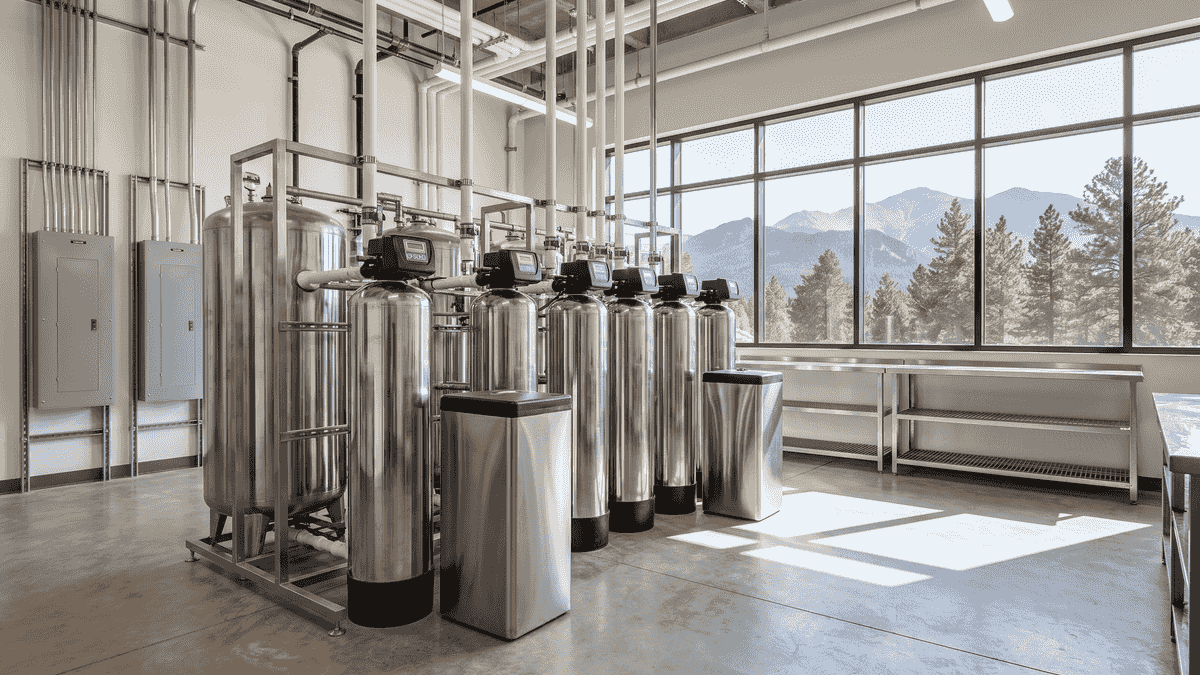
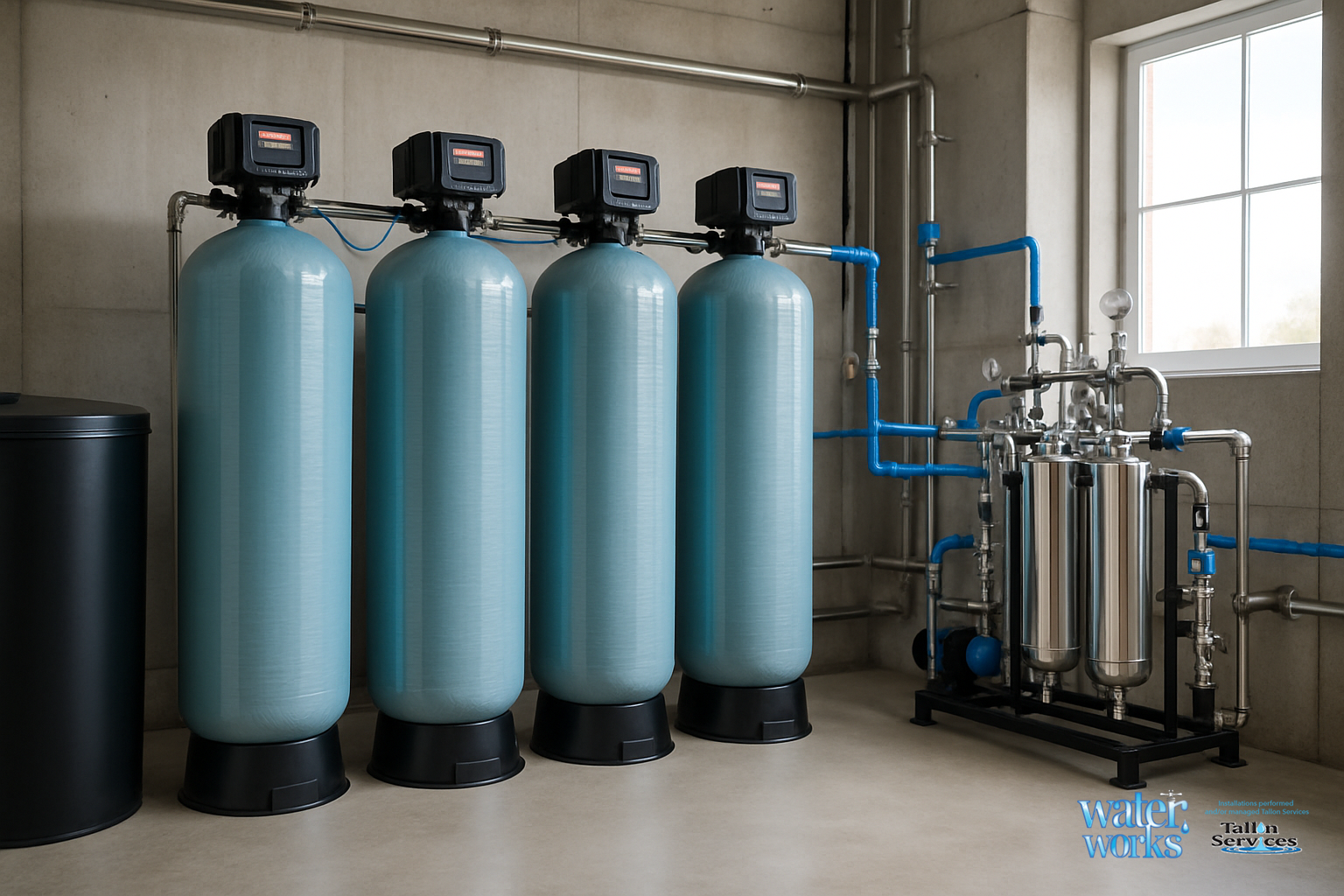
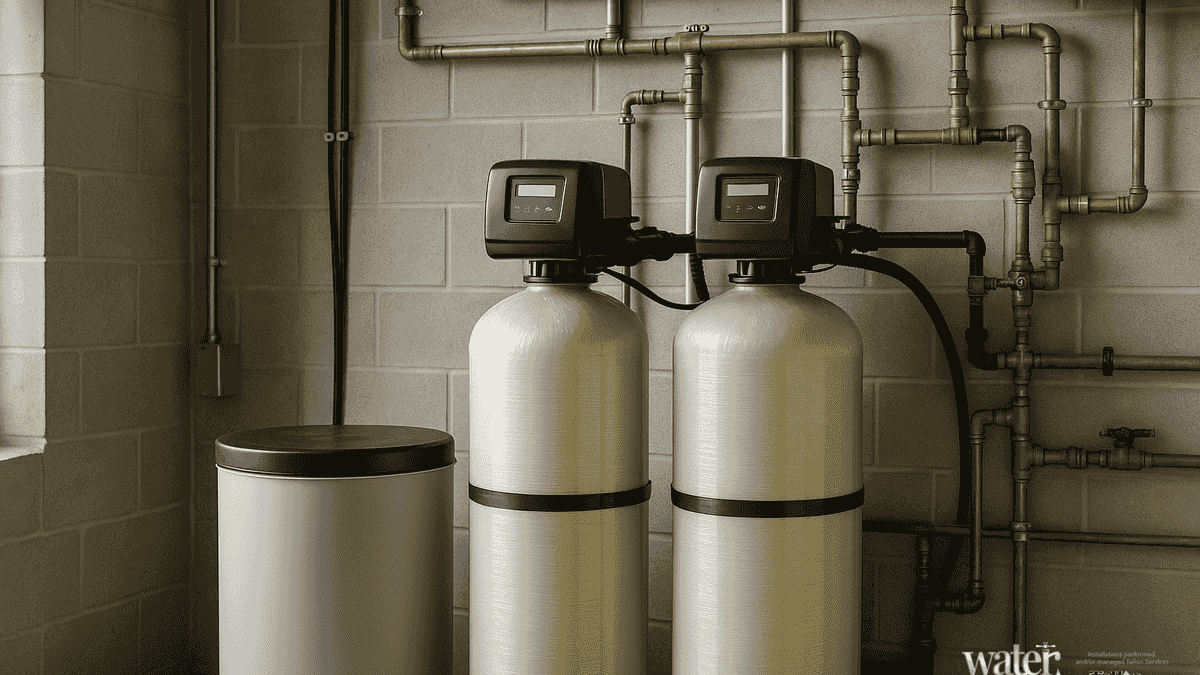
For most Centennial homes on the municipal supply, the right answer is a system matched to the water at the tap. A water softener at the point of entry handles the moderately hard water — at 95.7 mg/L it protects appliances and plumbing — plus a reverse osmosis unit under the kitchen sink pulls trace metals, disinfection byproducts, and residual radium down to drinking-water levels. Because Centennial Water reports no lead service lines, the metals at the tap are household-side — so older homes with pre-1986 solder often add a whole house water filter and a lead-certified filter at the kitchen sink until the plumbing is replaced.
For the larger-lot homes on private wells, the system is similar but different in the details. Wells carrying iron and manganese need an oxidation filter or greensand stage; arsenic calls for anion-exchange or specialized media. Shallow wells with coliform risk add UV disinfection, and salt-free water conditioners are the pick where a homeowner wants scale control without sodium exchange. Well water treatment on the eastern edge is its own discipline — we install and verify at every tap, then return annually.
- No-cost on-site water testing
- Water softeners sized to Centennial's moderately hard 95.7 mg/L water
- Reverse osmosis for drinking-water taps (municipal and well)
- Carbon filtration for chlorine and disinfection byproducts
- Iron, manganese, and UV disinfection for eastern-edge wells

Coverage across the south metro
Service routes across the I-25 corridor and the south-metro suburbs
Centennial sits east of I-25 in the south metro, laced by the Arapahoe Road and County Line Road corridors — close enough to the Denver Metro office that reaching a municipal home or a well property on the eastern edge is a routine day. Coverage out of the Denver Metro office runs the south-metro suburbs around Centennial — Highlands Ranch to the southwest, Littleton and Englewood to the west, Parker to the southeast, Aurora and Denver to the north.
Centennial's neighborhoods range from Palos Verdes with pre-1986 plumbing to newer subdivisions like Fox Hill, so our techs size softeners, pre-filters, and RO units to the actual water reading. We keep every install on an annual testing cycle — including water filtration maintenance and PFAS removal consultations. The EPA set an enforceable limit of 4.0 ppt for PFOA and PFOS in April 2024, and Colorado has documented PFAS contamination in areas with industrial or firefighting-foam history.
- Denver Metro office — I-25 corridor through the south-metro suburbs
- Routes to Highlands Ranch, Littleton, Englewood, Parker, Aurora
- Well testing, softener installs, RO work on larger-lot well homes
- Softeners sized for Centennial's moderately hard water on every install
Centennial water — questions from homeowners
Is Centennial's tap water safe to drink?
Most of Centennial runs on municipal water from the Centennial Water and Sanitation District — treated surface supply blended with deep bedrock-aquifer water, tested against federal and state standards. Meeting the standard at the district's tap is not the same as being clean at your kitchen sink, though: the distribution system carries chlorine residual and its byproducts, and homes built before the 1986 lead ban can leach trace metals from solder and brass fixtures. The district reports no lead service lines, so what shows up at the tap is household plumbing, not the main. A real test at your own faucet is the only straight answer on what your household actually drinks.
What contaminants are most common in Centennial water?
Centennial Water's annual report tracks chlorine-disinfection byproducts — haloacetic acids (HAA5), total trihalomethanes, bromodichloromethane, dibromochloromethane — plus nitrate, nitrite, arsenic, radium, and trace lead and copper from older plumbing. Hardness is what homeowners notice first: at 95.7 mg/L (5.6 gpg) the mineral load is moderately hard, enough to leave scale. On the eastern-edge wells the profile shifts to groundwater — iron and manganese staining, coliform and nitrates after runoff, arsenic from the alluvial material, VOCs near older septic. A single on-site panel at your address separates what's actually there from what the annual report averages out.
How often should I test my water in Centennial?
For homes on Centennial Water or a smaller district, run a panel at minimum once every twelve months — hardness, chlorine residual, pH, TDS, and lead and copper, especially in older neighborhoods like Palos Verdes or Willow Creek. For homes on a private well on the eastern edge, test annually for coliform, nitrates, and arsenic. Test again after any major storm or spring snowmelt pulse, and after any work on the well, pump, or plumbing. A yearly panel is the floor — step up the cadence if your supply or your pipes change.
Do Centennial homes really need a water softener?
Most do. Centennial Water's treated supply carries measurable dissolved mineral — 95.7 mg/L, or 5.6 grains per gallon, landing in the moderately-hard band on the USGS scale. Inside many homes the working hardness climbs higher from mineral pickup in older service lines. You'll see it as chalky deposits on showerheads and fixtures, haze on glassware, and premature wear on dishwashers, water heaters, and ice makers. On the eastern-edge wells the hardness runs well above the in-city average. A right-sized ion-exchange softener strips out the calcium and magnesium before they reach your fixtures; salt-free conditioners alter how scale forms but don't pull the minerals out.
Can you service my home outside of Centennial?
Yes. Our Denver Metro office at (303) 248-3390 serves Centennial and the neighboring south-metro communities along the I-25, Arapahoe Road, and County Line Road corridors — Highlands Ranch, Littleton, Englewood, Parker, Aurora, and Denver — with techs running scheduled routes year-round. On-site testing, softener and RO installs, and iron-and-manganese filtration on the larger-lot well homes are routine for that crew, and our four-region statewide dispatch handles everything beyond that belt.
Is reverse osmosis in Centennial worth it for drinking water?
On balance, yes — for most Centennial households it earns its place. The district meets federal and state standards at the plant, but chlorine residual, disinfection byproducts, trace metals from older plumbing, and naturally occurring radium are still present at the tap. A reverse osmosis system pulls those down to drinking-water levels at the one tap your family drinks from. The typical configuration is an under-sink filtration unit with carbon before the RO membrane. For eastern-edge well properties, RO also handles nitrates and any arsenic the well delivers.
Your free Centennial water test — book it now
Let's see what your Centennial water actually delivers — municipal tap in town, a private well on the larger-lot eastern edge, or an older home with pre-1986 plumbing. We test on-site and build a water purification system around your source and household. Schedule with our Denver Metro office at (303) 248-3390 for coverage across Centennial and the I-25 corridor, with statewide dispatch for anything beyond.
Get a quote- Denver Metro(303) 248-3390
- Northern Colorado(970) 381-4493
- Colorado Springs Metro(719) 694-2650
- Pueblo & S Colorado(719) 836-8118
From the blog