
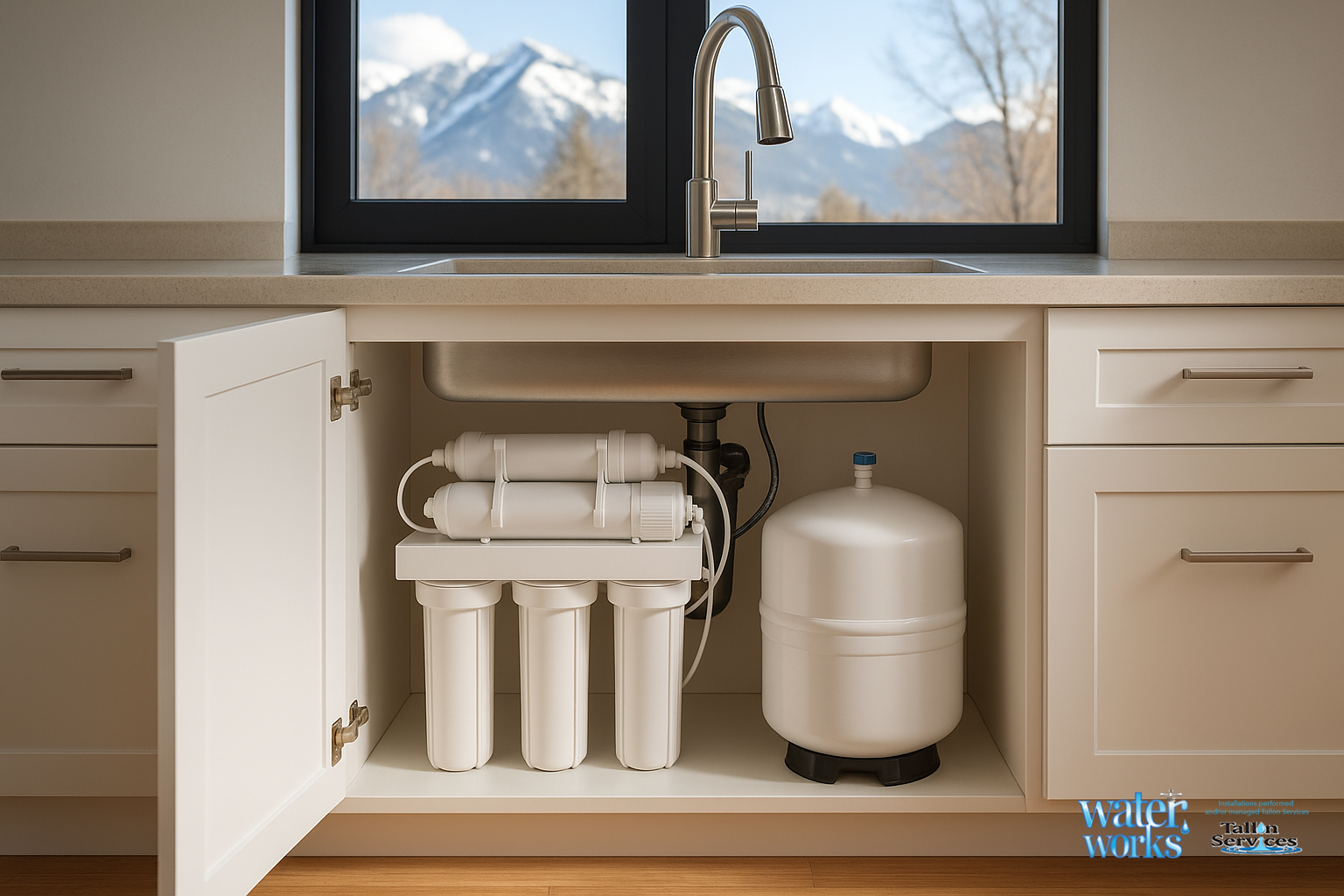
Why Reverse Osmosis Is the Gold Standard for Evergreen Drinking Water
Living in the foothills west of Denver, many of us appreciate the crisp mountain air and the natural beauty that surrounds our communities. But when it comes to the water flowing from our taps, nature alone doesn’t always deliver the purity we’d like for our families. That’s where reverse in osmosis Evergreen solutions come into play. At Water Works, we’ve spent years helping homeowners throughout the foothills — from Evergreen to Idaho Springs and everywhere in between — understand how their water quality can be improved through advanced filtration technology. Whether you’re on a private well or a municipal supply, reverse osmosis systems offer one of the most effective ways to remove contaminants and enjoy cleaner, better-tasting water right at the kitchen sink. In this post, we’ll walk you through what reverse osmosis is, how it works, why it matters for foothills residents, and what to consider when choosing a system for your home.
What Reverse Osmosis Actually Does
Reverse osmosis, often referred to simply as RO, is a water filtration process that forces water through a semi-permeable membrane to remove a wide range of contaminants. The membrane has pores so small that only water molecules can pass through, leaving behind dissolved solids, chemicals, and other impurities. It’s a proven technology used worldwide, and according to the EPA information on drinking water quality and treatment, it’s one of the most effective point-of-use treatment methods available to homeowners today.
What makes reverse osmosis particularly valuable for Evergreen residents is its ability to address multiple water quality concerns simultaneously. A well-designed RO system can reduce or remove lead, arsenic, nitrates, fluoride, chlorine byproducts, and even certain microplastics. For homes in the foothills where mineral content can be high and where older infrastructure or private wells may introduce unexpected contaminants, this multi-barrier approach provides real peace of mind. We often remind our customers that no single filter does everything — but reverse osmosis comes closer than most, which is why it remains a cornerstone of the systems we install across the region.
Why Foothills Water Presents Unique Challenges
Water quality in the mountains and foothills is different from what you’ll find down on the plains. Here in Evergreen and the surrounding areas, many homes rely on well water drawn from fractured rock aquifers, while others are served by small municipal or community systems. Both sources can carry their own quirks. Well water in the foothills frequently contains elevated levels of iron, manganese, hardness minerals, and sometimes naturally occurring elements like arsenic or radon. Municipal water, while treated and regulated, can still carry disinfectant byproducts, chlorine taste, and hardness that affects everything from your morning coffee to the lifespan of your appliances.
Customers in nearby Idaho Springs often ask us why their water tastes or behaves differently from what they experienced living in Denver proper. The answer usually comes down to geology and source. Mountain water picks up minerals as it moves through rock, and treatment approaches that work fine in the city may not fully address what’s coming out of a foothills tap. That’s why we always start with comprehensive water testing before recommending a system. Pairing reverse osmosis with residential water softener systems is a common combination we recommend, because softening the whole-house supply while running RO at the kitchen sink addresses both aesthetic and health-related concerns in a way that’s practical and cost-effective for most foothills households.
Choosing the Right System for Your Home
Not all reverse osmosis systems are created equal, and the right choice depends on what we find in your water, how much space you have under your sink, and how much filtered water your household actually uses day to day. Standard under-sink RO units typically produce around 50 gallons per day, which is more than enough for drinking and cooking for most families. If you’re also filling water bottles, brewing beer or coffee, or want to supply an ice maker, you may benefit from a higher-capacity system or one with a booster pump to improve efficiency and output.
We also pay close attention to membrane quality and the pre-filtration stages that protect the RO membrane. In areas like Evergreen and Idaho Springs where sediment or iron can be present, proper pre-treatment is essential — without it, the membrane can foul prematurely and the system won’t perform as intended. According to WHO drinking water quality guidelines, multi-barrier treatment approaches that combine pre-filtration with fine membrane filtration consistently deliver the best results for removing a broad spectrum of contaminants. That’s the approach we take with every system we design, and it’s why our installations tend to perform reliably for years with only routine maintenance. We don’t believe in one-size-fits-all solutions, and we’ll never recommend equipment you don’t actually need.
Maintenance and Long-Term Performance
One of the most common questions we hear from homeowners considering reverse osmosis is how much upkeep the system will require. The honest answer is that RO systems are relatively low-maintenance, but they’re not maintenance-free. Pre-filters typically need replacement every six to twelve months depending on your water quality and usage, while the RO membrane itself often lasts two to three years or longer with proper pre-treatment. We provide clear maintenance schedules with every installation and offer service plans so our customers never have to guess when it’s time for a filter change.
For homeowners who also have [commercial water softener solutions](/services/commercial-water-softener solutions) or whole-house treatment in place, we coordinate maintenance so everything stays on track together. Water efficiency is another consideration, and the EPA WaterSense water efficiency resources offer helpful context for understanding how much water treatment systems use in their normal operation. Modern RO units are significantly more efficient than older models, and we can help you choose a system that balances performance with responsible water use — something that matters to many of our foothills customers who are mindful of their well output or local supply, especially during drier months.
If you’re considering a reverse osmosis system for your Evergreen home — or if you just want to better understand what’s in your water — we’d love to help. At Water Works, we’ve built our reputation on honest assessments, quality installations, and ongoing support that keeps your water clean for the long haul. We serve homeowners throughout Evergreen, Idaho Springs, and the surrounding mountain communities, and we’re happy to provide a free water test and consultation tailored to your specific situation. Give us a call at 303-248-3390 to schedule your appointment, and let’s make sure the water in your home is everything it should be.